SOCIAL MEDIA

Showing posts sorted by relevance for query garlic. Sort by date Show all posts

Tuesday, September 13, 2022

Magical and Medicinal Uses of Garlic

garlic, herbalism, herbal remedy, magic, witchcraft, herb magic, green witchcraft, hedgewitch, herb magic, herb magick, magick, magic, occult, wicca, wiccan, pagan, neopagan

Gender: Masculine
Planet: Mars
Element: Fire
Powers: Courage, Exorcism, Healing, Lust, Protection, Strength
Magical Uses and History: Garlic is one of the earliest domesticated plants, and while its lineage is uncertain, its magical and healing abilities are anything but. In Talmudic literature, garlic is commonly described as protection against all manner of evils, including the Evil Eye, demons, witches, and, most famously, vampires. In one tale, garlic was given to a servant by their master after asking for the weaponry of a knight, suggesting that garlic is as powerful and protective as a sword. Odysseus used garlic to protect himself against Circe, who had turned his men into pigs. In India, garlic was believed to have originated from a drop of amrita or divine ambrosia that was unintentionally left behind by the bird-like creature and Lord Vishnu's vehicle, Garuda. Garuda is known for driving away evil, negative spirits, and poison, further associating garlic with protection. In the Balkans, garlic was rubbed on the chest, soles of the feet, and armpits on Christmas and Easter to protect everyone, especially children, from being eaten by witches, who were said to feed the most on the holy days. While rubbing garlic on children, parents would recite the following charm: "When the witch has counted up all the blades of grass on the ground and all the leaves on the trees, then let her kill my child!" On St. Thomas's Day, October 19th, garlic bulbs were hung in windows to keep witches away from the house all year while during the middle ages, it was worn around the neck to protect against werewolves and hung in doorways for the same purposes. Most famously, however, garlic was used as protection against vampires.

Bram Stoker's Dracula popularized the Romanian belief that garlic wards off vampires, but it wasn't just in Romania that it was believed garlic could ward off vampires. In China and the Malays, children's foreheads were anointed with garlic to protect against vampires as well. While the origins of the vampire are highly debated, some suggest that vampire folklore arises from the disease porphyria, a term used to describe several diseases that are caused by irregularities in the production of heme in the blood. The virus is largely carried by saliva, making transmission highly likely, but those infected often have a strong aversion to strong, pungent smells, like that of garlic. As such, garlic was worn, hung in the home, and rubbed on keyholes to deter vampires. Diseases caused by mosquito bites were also often referred to as "the touch of the vampire" and garlic was often used as an insect repellent by being rubbed on the body or eaten to stave off illness, associating it with both protection and healing.

However, these same tales are rife with prejudices and biases, especially against Jewish and poor people, who were described as smelling bad because they "rubbed Christ's body with garlic." Such accusations were used to stigmatize entire social groups and promote hate and explains where garlic nicknames such as "Italian perfume" and "Bronx vanilla" originate from.

Apart from hanging in the home or rubbing one's body with garlic, it was also used as an offering to Hecate for protection. Bulbs were routinely left at crossroads for Her in return for protection against evil, ill-will, witches, and other ill-intentioned spirits. Hecate was also offered garlic during childbirth and placed in the birthing chamber to protect women and children from demons and ensure a safe, healthy delivery.

Apart from protection, garlic was also believed to promote health and increase strength and endurance. Greek athletes and soldiers would eat large amounts of garlic prior to a match or battle to increase their strength and endurance and ensure victory. In Rome, not only did the soldiers consume garlic for courage, but Roman generals would also plant fields of garlic in the countries they conquered, believing that courage would be transferred to their soldiers on the battlefield. In Egypt, slaves were fed garlic to keep them strong and healthy, and King Tut was documented as spending fifteen pounds of garlic to buy healthy slaves. Even as recently as World War II, Russian soldiers ate garlic before going into battle to promote courage and strength and protect their bodies from bullets. As such, garlic can be used to promote strength, courage, and endurance whether for the witch or the spell being cast.

Garlic was also noted for its healing abilities and is often used to fight infection and stave off illnesses. Hippocrates recorded garlic being used to fight infections, clean wounds, treat cancer and leprosy, and cure digestive disorders. Later, Dioscorides praised garlic for its ability to treat heart problems, while Pliny listed 61 remedies featuring garlic that was used to treat everything from the common cold to epilepsy. In the Middle East, garlic was used to treat the plague and prevent others from getting sick. As such, garlic can be used in spells for healing, health, and general wellness.

Finally, garlic is associated with wealth, luck, and prosperity. Garlic is often consumed on Christmas Eve or New Year's Day to ensure good luck and prosperity, while in China, garlic is given to newlyweds as a symbol of health and prosperity. In Ancient China, garlic was often planted around the home to attract good luck and ward off evil. As such, garlic can be used in spells to bring luck, prosperity, and wealth.

Garlic can be used in a number of spells including:
    Protection Spells
    Endurance Magic
    Prosperity Magic
    Healing Spells
    Wards
    Money Spells

Garlic has a long and rich history, and as such, I couldn't include everything in this article. If you would like to learn more, including more about Romanian garlic folklore, I encourage you to read through the following articles:

These amazing resources cover garlic in a way that would take me multiple posts.

Medicinal Uses: Garlic is among the most versatile herbs in the natural world, being universally recognized for its medicinal properties and uses. Garlic is antimicrobial, acting on bacteria, viruses, and parasites alike. The volatile oil is effective against chest congestion, helping to break up and remove mucus in the lungs. It can be used to treat bronchitis, coughs, sour throat, colds, and influenza. Garlic has also been found to help support natural gut flora, killing pathogenic organisms and promoting overall gut health. It also lowers blood pressure and cholesterol. Externally it has been used to treat ringworm and threadworm.

Preparation and Dosage: Internally, garlic can be taken as an infused oil, honey, or eaten whole. To create an effective cough/cold/flu remedy, combine 1 minced glove of garlic with 1 teaspoon fresh lemon juice and 1-2 teaspoons of honey. Take up to three times a day. This infused honey can also be added to 1 cup of boiling water and a slice of ginger root and drank as an infusion up to three times a day for the same purpose. To create an infused oil, combine 4 crushed garlic cloves with 3 tablespoons of oil. Simmer for 1-2 minutes, stirring occasionally. Strain and store for up to 12 months. Add to foods or take straight to improve gut health, fight infection, and speed in recovery.  If you wish to eat garlic whole, eat up to three cloves a day. Externally, garlic can be crushed and used as a poultice to treat fungal infections. Garlic is commonly added to other herbal remedies, such as fire cider, to treat infections and improve overall health. This is not a complete list of potential uses.

 

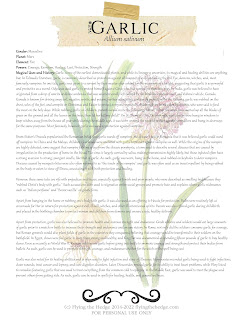
Want to print a copy of this for your Book of Shadows? Click below for your free copy! 
garlic, herbalism, herbal remedy, magic, witchcraft, herb magic, green witchcraft, hedgewitch, herb magic, herb magick, magick, magic, occult, wicca, wiccan, pagan, neopagan


If you liked this post and would like to support future content, please consider leaving a small tip in the jar. 

Tuesday, November 20, 2018

Apothecary: Sore Throat Remedy

Apothecary: Sore Throat Remedy

I was sick for about a week and a half with what I originally thought was tonsillitis. After a couple of days, it turned into a sinus infection. Thankfully, I know exactly what to do when I start to get sick, especially when my throat begins to hurt. Please note that this is not intended as medical advice and you should consult with your doctor before trying the remedy listed below. If you are running a fever, you need to seek medical attention. Antibiotics aren't terrible. In fact, they are life-saving, so if you need some, make sure you get them!

Sore Throat Remedy

Ingredients
3 tbsp minced garlic
1 tbsp cayenne pepper
real honey to taste

Directions
Mix the garlic and cayenne together until well combined. You can use fresh or jarred garlic. There really isn't a difference in effectiveness. Add at least a teaspoon of honey, if not a tablespoon or two, to taste. This is super, super spicy without the honey, so be sure to add enough to dull the spice and sweeten the taste.  Take 1 tablespoon every 3-4 hours after eating. Too much garlic on its own can upset your stomach.

This remedy is great for adults and children. Unless you are allergic to one of the ingredients, there is little risk, other than an upset tummy, to using this remedy freely. It should be noted children until the age of one should NOT eat honey, so avoid giving this remedy to a small child. Also, should your symptoms worsen or you begin to run a fever, you should definitely seek medical attention. Sometimes antibiotics are best. It's the difference between living our best life and dying.

How It Works

Garlic is one of the most universal herbs on the market and has been recognized by herbalists and scientists as one of the most effective antimicrobial plants, acting to help kill bacteria, viruses, and parasites. Because of its unique properties, garlic is the perfect remedy for a sore throat, whether it be brought on by a bacteria or virus.

Cayenne, on the other hand, is a stimulant, increasing blood flow to help speed up the healing process. Like garlic, cayenne is also naturally antiseptic, helping to kill bacteria and viruses lurking in the throat.

And finally, raw honey! Honey is also naturally antiseptic, working with garlic and cayenne to fight off the infection. It is also anti-inflammatory, helping reduce swelling of the tonsils and coating them to reduce irritation. Of course, the honey also dulls the spice of the cayenne, making the whole remedy more palpable. A spoonful of sugar helps the medicine go down, right?

***

Is there a particular way you ward off a sore throat? I'm always looking for new recipes!


Friday, October 31, 2014

Vampires

In the spirit of Halloween I thought I would write this Pagan Blog Project post about vampires. No undead spirit retains as much fascination from the living as vampires. Many understand vampires to exist somewhere between the living and dead, but are they tortured souls or rewarded ones?

Interpretations differ between cultures and myths, but the one quality universally accepted is that they suck vitality from others, either in the form of blood or sexual energy. The most famous vampires, including Bram Stroker's Dracula, Anne Rice's Lestat, and Sheridan Le Fanu's Carmilla, are all blood suckers. Some vampires kill their victims by draining all of their blood quickly while others prolong the process. Others still use the blood as merely a means to drain the victim's life force. However, vampires such as Lillith and her daughters, Herodias and her daughters, La Diablesse of the French Caribbean, and the Karina, drain sexual vitality from their victims. This is often done through sexual intercourse, whether physically or through dream hauntings. Many of today's portrayals of vampires combines the blood-sucker with the more ancient incubus/succubus (drainer of sexual vitality).

So how does one become a vampire? Well, there are many different traditions citing very different causes.
    Guide to Vampires
  • Inadequate/improper funeral rites
  • There is a contagious quality to being a vampire. Once attacked by a vampire you either become one yourself or die.
  • In Transylvanian folklore, illegitimate songs, born outside Church-sanctioned marriages are doomed to become vampires.
  • Some spirits are believed to be innately vampiric without rhyme or reason.
  • Other traditions claim those born on Christmas Day are potentially future vampires.
  • And my personal favorite is from Ukrainian folklore. According to this legend a vampire is the inevitable result of sexual relations between a witch and werewolf.
Some of these are much crueler than the others if you consider the implications. I am curious to know how many people killed their illegitimate sons out of fear.

Of course among the legends are many antidotes. These traditionally include bells, bright light or sunlight, garlic, onions, and silver bullets or bullets made from melted down bells. Crosses and Holy Water is still up for debate. These do not appear in any traditions prior to the Church introducing them and many believe them to be Christian propaganda. Of course there are always spells to repel vampires.

The Gypsies of India suggest wearing a charged and consecrated iron ring set with pearls to ward off vampires. After an encounter they say to cleanse the ring in incense smoke. Wearing dried peppermint around you neck will also ward off vampires. You can mix it with dried garlic to make an even more powerful ward. However, my favorite is the idea that vampires are OCD. Supposedly if there is fishing net, or in our case modern screens, over your windows the vampire will compulsively count all the knots or holes before entering. The idea is that he/she will either be so distracted they get caught in sunlight or they give up and move to another home.

If you are daring you can try to capture a vampire in a glass or metal bottle like a genie. Don't use plastic as they can presumably bite through plastic. This works like a fly-trap. Place some kind of tempting food in the bottle. Set the bottle out and wait. You will know you have caught a vampire when you observe a bit of straw or fluff within the bottle. Seal the bottle securely and toss it into a fire to destroy the vampire. This spell of course only works on a vampire who is understood to have once been a regular human.

So this Halloween, take solace in the fact that you very likely have screens on all your windows and simply putting out some peppermint and garlic or having some bells on hand will keep you safe. And remember witches, don't do anything naughty with a werewolf else you could create your own little vampire.

I hope everyone has a wonderful Halloween. May your ancestors be with you.


Tuesday, September 15, 2020

Witch's Cabinet Recipe: Spinach and Sun-Dried Tomato Quiche

recipe, quiche, spinach, sun-dried tomato, fall, quick recipe, easy recipe

Mabon is right around the corner and what better to celebrate the season than with some quiche? My beautiful hens are still producing an ample amount of eggs, and quiche is a great way to use some of those eggs up. This quiche recipe includes sun-dried tomatoes, spinach, and goat cheese (or vegan cheese if you are avoiding dairy as I am), all perfect foods for this time of year. Magically, sun-dried tomatoes are associated with love and romance, but also are a common offering during the first two harvests. Spinach is associated with energy and strength, eggs with fertility and protection, and goat cheese with purity. Combined, this quiche is designed to help continue your prosperity through the winter months, inspire continues love as the nights grow dark, and honor the harvest deities for their wonderful bounty.

Ingredients:
     1 pie crust (store-bought or homemade)
     1/2 teaspoon olive oil
     2 cloves garlic, minced
     3 cups spinach
     4-6 eggs
     1 cup whole milk or creamy oat milk
     1/2 cup sun-dried tomatoes, chopped
     4 ounces goat cheese, crumbled, or vegan mozzarella
     salt and pepper to taste

Directions:
  1. Preheat oven to 400°F. While the oven is preheating, carefully place the pie crust into a 9-inch pie dish. Pinch the dough to create a crust and seal the edges. Poke the bottom lightly with a fork.
  2. Line the pie crust with parchment paper or aluminum foil and fill with pie weights or dried beans. Bake for 15-16 minutes. Remove from the oven and decrease the temperature to 350°F.
  3. Heat the oil in a pan and saute the garlic until fragrant. Add the spinach and cook until wilted.
  4. In a bowl, whisk together eggs and milk until well combined. Stir in sun-dried tomatoes, garlic, spinach, and cheese. Salt and pepper to taste and pour into baked pie crust.
  5. Bake for 45-60 minutes, until the center of the quiche has set. You may need to cover the edges of the crust with foil to prevent burning.
  6. Allow to cool for 10 minutes and enjoy!
This makes between 4 and 8 servings depending on how to slice it. Honestly, I eat half of this thing in a sitting. I know, I know, but it's really that darn good!

recipe, quiche, spinach, sun-dried tomato, fall, quick recipe, easy recipe

I hope you enjoy the recipe and have a fantastic fall and a lovely Mabon.


If you liked this post and would like to support future content, please consider leaving a small tip in the jar. 

Tuesday, September 24, 2024

Harnessing Autumn’s Magic: Herbal Allies for Health and Witchcraft

Harnessing Autumn’s Magic: Herbal Allies for Health and Witchcraft

If I haven't already made it abundantly clear, working with plants is one of the key tenets of my magical practice, just like the hedge witches who came before me. The relationships I have built with the plants in my garden and around my home are precious, allowing me to cast spells, develop rituals, and create healing medicines. As the seasons change, so do the plants I work with. Part of practicing local, animistic witchcraft means shifting with the seasons and relying on what is available. That isn't to say I don't bring in some plants that aren't necessarily prevalent this time of year, but I am definitely more cognizant of my choices each season.

Seasonal plant allies are an excellent source of magic and healing, bringing a potent natural element to your work. But what is a plant ally exactly? 

A plant ally is a plant that you have a close relationship with, much like that of a close friend. Just like real friendships, your plant allies shift and change as you grow. Some will be fair-weather friends, while others will stick with you through the thick of it. They come into our lives to guide us, challenge us, and encourage us to face life's challenges and adventures.

How you connect with your plant allies is entirely personal and a topic for another post, but developing these relationships is critical for those interested in working with plants in their magical or healing practice. We are but one spirit in the cosmos, no greater or smaller than others. Respecting others is paramount to an ethical practice, and I take it quite seriously.

Like many witches, autumn is my favorite time of year. I was born during the autumn months; my legal middle name is Autumn; I love the cooler weather, the misty weather, the changing leaves, and the all-around coziness and sense of community that comes with autumn. Autumn is such a liminal time, allowing us to tap into deep wells of magic otherwise inaccessible to most. The plants I tend to work with during autumn help me do just that, while also ensuring that despite moving indoors and into crowded spaces, I remain relatively happy and healthy.

In today's post, we will journey together to get to know the plants I rely on most during the autumn months for witchcraft and healing. I have grouped the plants based on need and offered alternatives where possible. You'll notice there is overlap with the plants and ailments mentioned in Transitioning for Summer to Autumn: Herbal Remedies for the Season of Mists and Mellow Fruitfulness. After all, why wouldn't there be?

For Tending to the Future

I always associate autumn with wisdom and planning ahead, as students return to the classroom and store rooms are checked to ensure a family's survival through the winter. There was nothing worse for a family than failure to thoroughly plan for the months ahead. While many of us are now privileged enough to not have to worry about stocking our pantries prior to winter, we still require the wisdom and forethought that went into such a process.

The herbs on this list are magically and medicinally associated with brain health, memory, strengthening resolve, and replenishing energy.

Milky Oats (Avena sativa): Generally gathered in August after the rye harvest, milky oats are an incredible nerve tonic, supporting the nervous system and adrenals by aiding in stress management. These actions make it especially helpful for those struggling with chronic stress and fatigue, as it acts as a stimulant and relaxant. Magically, milky oats are associated with clarity, tempering reactivity, prosperity, and abundance due to their generous nature. Add to spells, rituals, and remedies to clear your mind, give you strength, and ensure a prosperous remainder of the year.

Rosemary (Salvia rosmarinus): Like milky oats, rosemary is a powerful nervine stimulant that clears brain fog, improves memory, and soothes depression. While generally harvested in the summer, rosemary dries and keeps incredibly well, making it perfect for use out of season. Magically, rosemary is associated with wisdom, clarity, cleansing, and purification. It can rid you of blockages and aid you in developing a working plan (not just a concept of one). Add rosemary to spells, rituals, and remedies to increase focus, remove brain fog, and bring clarity and wisdom to a situation.

Peppermint (Mentha piperita): Oh peppermint...while most people associate peppermint with winter (and rightfully so), it's also a potent ally for autumn. Peppermint is incredibly aromatic, acting as a nervine tonic for anxiety, tension, and 'hysteria.' It is known to help clear brain fog, stimulate memory, and awaken the mind so you can see a clear path forward. It's incredibly energizing, giving you that push you need to plan ahead. Magically, peppermint is associated with abundance, increasing psychic powers, and overall health, making it perfect for planning ahead. Add peppermint to spells, rituals, and remedies to combat fatigue, reduce tension, and energize.

Other potential plant allies for planning ahead, wisdom, and overall brain health include sage (Salvia spp.), skullcap (Scutellaria lateriflora), and ginkgo (Gingko biloba).


For Battling the Growing Shadow

As summer wanes, the shadow begins to grow over the Earth, leaving us with less and less daylight as the seasons turn to autumn and then winter. Feelings of melancholy are common during this shift, and while herbs alone will not cure your depression or anxiety, they can certainly help. However, there is so much more to this darkness this time of year. As the veil begins to thin, unwanted negative entities find their way into our realm, and sometimes into our homes. Dispelling, fortifying, and protecting the home becomes critical this time of year, as darkness begets darkness.

Lemon balm (Melissa officinalis): I adore lemon balm for its protective and uplifting nature. Harvested from June through September, lemon balm is a potent natural antidepressant, its sedative oils helping to relieve depression, anxiety, and tension. It also causes mild vasodilation, allowing blood pressure to lower and therefore reducing stress. Magically, lemon balm is associated with happiness, renewal, and cleansing. Use lemon balm in spells, rituals, and remedies to bring happiness, dispel negativity, and renew the positive energy in you or your home.

Skullcap (Scutellaria laterifolia): What a suiting name for an autumnal herb that fights off depression and negativity! Skullcap is a sedative, nervine tonic that helps reduce nervous tension while renewing and revivifying the central nervous system. It is often used to treat depression, especially depression that includes exhaustion and fatigue. It is commonly harvested from August through September, making it perfect for this time of year. Magically, skullcap is associated with peace, calm, devotion, protection, and exorcisms. Use it in spells, rituals, and remedies to remove negative energy and bring peace and calm to any situation.

Valerian (Valeriana officinalis): Unearthed in late fall, valerian is a well-known sedative that has not only been used to treat insomnia, but also to reduce tension, anxiety, and depression. It combines well with skullcap and lemon balm to create a potent antidepressant. While it's most often magically associated with sleep, it's also associated with peace, relaxation, and even protection against lightning and evil. Use valerian in spells, rituals, and remedies to dispel depression, anxiety, and tension and bring peace and relaxation to your life.

Other potential plant allies for combating depression, anxiety, fatigue, and negativity include motherwort (Leonurus cardiaca), vervain (Verbena spp.), and St. Joan's Wort (Hypericum perforatum).


For An Ounce of Protection

Cooler weather means more time spent indoors and, therefore, more opportunities for pathogens to spread. While the cooler weather doesn't weaken our immune system, changes in our environment that increase stress and fatigue certainly do. "An ounce of prevention is worth a pound in cure" which is exactly what this recipe is. Preventing illness before it starts is far easier than trying to cure an illness once it starts.

Elderberry (Sambucus nigra): Elderberry is a favorite among herbalists for its wide array of uses, particularly its ability to fight off and prevent colds, fevers, and the flu. The bark and berries are collected from August through September and can be easily dried or made into a syrup that stores easily through the winter months. Magically, elderberry is associated with health (duh!), exorcism, purification, and protection. Include elderberries in spells, rituals, and remedies for protection, general health and wellness, and to remove unwanted illnesses, negativity, or other unwanted entities from you and your home.

Garlic (Allium sativum): Commonly used in fire cider, garlic is a powerful healer and protector. Garlic is a natural antiseptic, helping prevent and treat infections caused by bacteria, viruses, parasites, and even fungi. It is used to treat and prevent colds, flu, coughs, and upper respiratory infections, reduce blood pressure, and lower cholesterol levels. It being a basic component in many recipes makes it even easier to consume, and there are no known downsides to daily consumption. Magically, garlic is associated with protection, exorcism, dispelling negativity, and cleansing. Use it in spells, rituals, and remedies for protection, health, wellness, and the removal of anything unwanted and unwelcome.

Nasturtium (Tropaeolum majus): Collected between July and October, nasturtium is a powerful antimicrobial, both topically and internally. It helps fight off and prevent the common cold and the flu as well as fight upper respiratory infections. Magically, it is associated with vitality, longevity, and balance. Use in spells, rituals, and remedies to prevent illness, strengthen your immune system, resolve, and bring balance internally and externally.

Other potential plant allies for an ounce of protection include milky oats (Avena sativa), echinacea (Echinacea purpurea), and goldenseal (Hydrastis canadensis).


For A Breath of Fresh Air

With cooler weather comes drier, harsher air and respiratory infections. On top of the weather, we also see an increase in allergy symptoms as an entirely different set of plants is blooming this time of year. Supporting respiratory health becomes paramount this time of year, as does speaking our truth. Just because the sun is waning and there is a chill in the air does not mean that our voices should be silenced. As such, these plants will not only help you breathe easily, but also help you find that voice of yours.

Licorice (Glycyrrhiza glabra): Harvested in late fall, licorice root is an expectorant, demulcent, and antispasmodic, meaning it's perfect for treating bronchial problems such as bronchitis, coughs, and other respiratory infections. Magically, licorice is associated with love and lust, but also control, domination, and increasing magical power. As such, it can be used in spells, rituals, and remedies to remove obstacles, bind negativity, and control one's breath and voice, and potentially that of another.

Thyme (Thymus vulgaris): Thyme is an extremely common and easy plant to grow. The flowering branches are best collected between June and August, and dry very well, allowing it to be used for months after harvest. Thyme is an antimicrobial expectorant, making it perfect to treat laryngitis, tonsillitis, sore throats, bronchitis, whooping cough, and asthma. Magically, thyme is used to invoke courage, banish negativity, heal, and attract happiness. Use thyme in spells, rituals, and remedies for finding and strengthening your voice, breathing easily, and removing negativity from your life.

Elecampane (Inula helenium): The rhizome of elecampane, also known as horse-heal or elfdock, is unearthed and harvested from September through October and used as an expectorant to treat coughs and bronchitis, especially among children, allowing for the removal of phlegm and catarrh. Elecampane contains chemicals that reduce inflammation, soothe irritation, and kill bacteria commonly associated with whooping cough and bronchitis. It has even been used to treat tuberculosis! It's incredibly fast-acting, reducing symptoms quickly and allowing the ill person to rest peacefully. Magically, it's associated with sustaining the spirit, protection, neutralizing negative energy, enhancing psychic abilities, and even aiding in trancework and shapeshifting. As such, elecampane can be used in spells, rituals, and remedies not only for lung support, but also to remove, protect against, and otherwise hide from illness, negativity, and other untoward creatures.

Other potential plant allies for supporting lung health, breathing easily, and finding one's voice include goldenrod (Solidago virgauria), mullein (Verbascum thapsus), plantain (Plantago spp.), and hyssop (Hyssopus officinalis).

***


As the wheel turns toward autumn, these plant allies can help ensure you are happy and healthy for the coming months. Magically, they can empower and enrich your spells and rituals, timing them with seasonal changes and encouraging a bright and prosperous future. How you work with these plant allies is entirely up to you, but remember to always ask them for their assistance and thank them for whatever they provide for you in return. Maintaining these relationships is important and worthwhile.

Is there a plant you like to work with during the autumn months that I failed to include on this list? Let me know in the comments below!


If you liked this post and would like to support future content, please consider leaving a small tip in the jar. 

Monday, February 1, 2016

Dollar Store Witchcraft

Dollar Store Witchcraft

Witchcraft doesn't have to be expensive. In fact, many things you need you can make, grow, or buy cheaply at your local Dollar Store (Dollar Tree in my area). The trick is to know your way around your local Dollar Store and if the item is really worth the low price of a dollar.

For your convenience, I visited my local Dollar Tree and complied a list of 13 items you can pick up to use in your craft.
Dollar Store Witchcraft

Dollar Store Witchcraft1. Candles & Candle Holder: There is an ever changing variety of candles you can pick up at the Dollar Tree. However, there are some staple candles they always have in stock. You can always find red and white taper candles, like those featured in the DIY Candle Wheel. There are also boxes and even bags of tea lights. I use tea lights all the time for spells as they burn quickly so I don't have to snuff them to finish a spell. They usually burn out by the time I am done. There are also a variety of candle holders so you needn't worry about what you will place your candles in when you get home.

2. Scented Oil & Oil Warms: The selection is usually small, but you can always find at least one or two scented oils and oil warmers.You can use the oils to anoint your candles, statues, or stones, or simply warm them in your oil warmer. I actually purchased a burner to burn my charcoal in and it works perfectly. DO NOT use these scented oils to anoint yourself. You will need anointing oil or essential oils safe for use on your skin for that.

Dollar Store Witchcraft

3. Stones: Looking to make your own runes and don't have a local river or lake near by to collect some river rocks? Not to worry! You're local Dollar Store has plenty to choose from. Use them to make runes, place on your altar, fill vases, or create other witchy works of art.

Dollar Store Witchcraft4. Seasonal Items: The Dollar Tree always has a variety of flowers you can choose from no matter what the time of year, but around the holidays they stock a number of seasonal items you can use to adorn your altar. Figurines of cupids for Imbolc, rabbits for Ostara, suns and wind chimes for Beltane and Litha, wheat or corn for Mabon and Lammas, pumpkins for Samhain, and Yule trees and logs for Yule. They also stock up on seasonal foods and drinks you can use as offerings as well as seasonal floral decorations to place on your altar or around your home. Around Yule they have a number of bells you can choose from for ritual and spell work.

5. Matches & Lighters: A witch can never have too many matches and lighters. They range in size from small to long depending on your needs. It is always a good idea to have a mix, especially if you want to minimize your chances of getting burned!

6. Herbs: The Dollar Tree carries a small assortment of herbs and spices, but not all of them are a steal. Check your local grocery and compare prices. I've been able to purchase organic Basil on sale for cheaper than the Dollar Tree. However, they are generally cheaper here if you are not growing and drying them yourself. They usually have basil, oregano, garlic powder (sometimes minced garlic), and pepper.

7. Sea Salt & Epsom Salt: What witch doesn't use salt? Representing Earth, salt is needed in a variety of rituals and spells as well as in cleansing baths. You can pick up plenty of sea salt for rituals and spells and Epsom salt cheaply at the Dollar Tree. They even carry lavender scented Epsom salt to increase the potency of your cleansing bath prior to a ritual.

Dollar Store Witchcraft

8. Glass Jars, Small Bowls, & Trays: From jars and vases to bowls and trays, the Dollar Tree has just about everything you need for storage and offering dishes. Use the vases to hold your flowers or stones, the glass jars for spell work, and the small bowls and trays as offering dishes. Depending on the time you year, you may even find some decorated for the holiday season!

Dollar Store Witchcraft

9. Incense & Incense Burners: Most Dollar Trees now carry incense cones, sticks, and burners. The variety is generally limited, but depending on the time year they can have a greater variety. Incense are a must for any witch's cabinet as they are often used to represent Air and sometimes Air and Fire together.  I purchased a new wooden incense burner there just yesterday.

Dollar Store Witchcraft

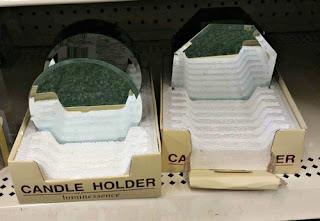
10. Scrying Mirrors: If you are into divination, why not pick up a mirror or two to create your very own scrying mirror? They have small framed mirrors and the "candle holder" mirrors featured below. Depending on your needs, this is a great place to pick them up to make your own!

11. "Chalice": Chalice is in quotes because 1) they are really just drinking glasses and 2) I'd like you to be aware of where the glass comes from. Due to recent scares, glass from China may contain lead. The Dollar Tree gets many of their products from China so keep an eye out. If you are not going to be using these for consumption, then go right ahead and pick some up! You can decorate them in any way you please while others come decorated for the seasons. They make great offering chalices for your altar or during ritual use.

12. Picture Frames: Want to place that picture of the God or Goddess or some pictures of you ancestors on your altar, but don't have the right frame? Have no fear! The Dollar Tree has you covered. They carry a variety of ever changing picture frames throughout the year ranging from small to printer paper size. These are great for decorating yourself. Place printed or drawn pictures of the deities, your ancestors, or the spell or ritual you are performing in the frams to keep them from getting wet or catching on fire during spell work and rituals.

13. Journals for Grimoires or BOS's: Sometimes you will get lucky and find a really great journal you can use as a Grimoire or BOS. Looking for a binder? They have those too. Most of the time the journals and binders are plain, allowing you to decorate them in anyway you see fit. A word of caution: some are not that high a quality and for the amount of use they will see, make sure you get something that will hold up!

And there you have it! Thirteen items you can pick up at the Dollar Store for all your witchcraft needs. You needn't spend hundreds of dollars to decorate your altar, cast a spell, or work a ritual. In fact, you don't really need any of these items to work magic. Remember, the magic comes from within you, the witch. All the other items simply enhance your magical workings and help you focus your mind on your intention.

Are there any items I did not mention that you pick up at the Dollar Store to aid in your witchcraft? Let me know in the comments and happy witchcrafting to you all!


Thursday, February 28, 2019

5 Unsuspecting Tools of the Hedgewitch

5 Unsuspecting Tools of the Hedgewitch

Witchcraft has its own set of "tools" or magical objects that are often employed during spells and rituals, including brooms/besom, wands, athames, chalices, etc, to enhance the magic performed. Lists of these tools are found in every book on witchcraft or Wicca, a flood of blog posts, and a large number of Pinterest boards. However, there are many tools witches often use that are not talked about. Here are 5 unsuspecting or little talked about tools of the hedgewitch, tools I commonly use every day in my practice.

1. Poetry. This is a pretty big one for me. First, poetry offers us melodic ways to cast our spells. They teach us how to organize and memorize spells in an easy yet beautiful format. Poetry is extremely easy to memorize, just like a song, which is why so many witches create rhyming spells or spells with iambic pentameter. You don't always want to carry your Grimoire or BOS into a ritual and it's much more powerful to have a spell memorized so you can speak it with conviction during your spell or ritual. Furthermore, poetry offers us some amazing magical correspondences. For example, my favorite poem is The Poison Tree by William Blake. Because of this poem, I associate apples with revenge and death. Another favorite of mine is The Rime of the Ancient Mariner by Samuel Taylor Coleridge. For me, the albatross represents innocence, patience, and purity. The Raven by Edgar Allen Poe is also a favorite of mine and as a result, I associate ravens with death, remorse, and lost love. Whatever the poem, you're going to find some pretty powerful correspondences that speak to you as well as an understanding of how to construct your spells if you use and read poetry.

2. Science. This may seem out of place for some of you. How in the world can magic and science coexist? Thankfully, the Hermetic Principles do a pretty good job of explaining the connection between science and magic, which has been covered numerous times, including by myself. Either way, magic works within the confines of our physical world, so understanding physics and chemistry will give you a pretty good understanding of energy, motion, and ingredient reactions. You construct better spells and perform stronger magic when you grasp scientific principles. Furthermore, science offers us a slew of correspondences. Garlic, for example, is well known in the medical community for being antibacterial and antiviral. In the magical community, we associate this with protection because garlic literally protects you from infections! Water is a know purifier, hence why we associate it with purification and renewal, while certain flowers are the first to grow in spring, making them associated with rebirth. Lions represent strength because physically they are strong, being able to take down prey larger than themselves, such as the water buffalo. Science offers us a greater understanding of our world and therefore a better understanding of the magic we perform. The two cannot be separated, and they shouldn't be. If you have to ignore science to perform magic, you may not be doing anything other than lying to yourself. Many of the correspondences you read in a book are based on science, and it's important you know WHY the correspondences exist if you are going to use them or write your own.

3. Tackle Boxes. Alright, so moving away from literature to more practical everyday objects. I have a lot of tackle boxes. I mean...like 4 or 5. I use them to organize crystals, herbs, and other smaller magical objects I collect, like acorns, petals, insect parts, and feathers. This is a valuable organizational tool for witches, so utilize them. You can purchase some at Dollar Tree, Walmart, or Amazon for next to nothing. In Dollar Tree, they tend to be sold near craft items and school supplies, although you may need to check with a store associate. You don't need "witchy" bottles or chests to organize your supplies. Modern tackle boxes are just as useful.

4. Scrapbook Supplies. I freaking love scrapbooking supplies, and I mean LOVE them. I had to stop going to craft stores because I was buying scrapbooking supplies faster than I could use them. I used to be super into scrapbooking. Now I am super into using my scrapbooking supplies for magical purposes. I use the papers to write spells, using colored papers or patterned papers to enhance the magic. For example, I use green paper for money spells, while rose floral papers get used in love spells. Furthermore, scrapbooking supplies are an excellent way to work with your Grimoire or BOS. You can decorate pages with papers, stickers, stamps, and so much more. Go wild and crazy! Seriously! I find it boring to spend time just writing and drawing. I plan on including many more pages in my Grimoire in the future that incorporate the supplies I already have. It is a great way to fill your magical book with your own power and personal creativity.

5. Calendars. I talked about all my calendars in one of my first posts of the year, so it shouldn't be a surprise they made this list too. From almanacs to personal planners, calendars play a role in helping us keep track of astrological events, major holidays, and our personal lives. They allow us to better plan spells by allowing us to work with the moon cycle, days of the week, or times during the day. Calendars also allow us to plan future spell work so we have everything we need when the time comes. If you are planning an elaborate ritual, you are going to need to set apart time to write the ritual and purchase any items you may not have. I also keep track of my goals, blog posts, hedge riding dates, and sometimes even my dreams. I make constant little notes off to the side in all my planners/calendars. It can be something as simple as how I'm feeling or more complex, like a premonition or omen or synchronicity. Keeping a calendar is like keeping a journal, at least for me. Mine is an integral part of my magic practice, and it should probably play a role in your magic as well.

So there you have it! Some may be unfamiliar or shocking, while others you may already be using. Help me add to the list. What are some unsuspecting or little mentioned tools you use in your magical practice?


Sunday, July 13, 2014

Threshold Protection Spell

Note: This post contains potentially problematic practices or language, cultural appropriation, or misinformation. I have been working diligently to decolonize my practice, for which you can learn more about in my article Decolonizing Witchcraft: Racism, Whitewashing, and Cultural Appropriation in Witchcraft and How to Decolonize Your Practice. I believe in documenting my journey in witchcraft and that my readers can learn from my mistakes, so the posts will remain as a learning opportunity.


Last night was the full moon and while banishing magic is best conducted during the waning moon, something told me that I should go ahead and clear out the negativity in our home, redo our threshold protection spell, and strengthen the ward currently protecting us. Sometimes it is better to listen to the universe than force the issue later on.

I spent the entire day cleaning the house and preparing for the moon to rise. Before you put up a ward or a threshold protection spell, you need to take down your previous ward and clear your home of all negativity. Cleaning is the best way to do this in my opinion. Some people take a more "magical" approach, using spells and charms, but cleaning, cleaning gets rid of the mundane and magical "dirt" while freeing your mind of clutter as well. You want to be sure to clean EVERYTHING. Yesterday I washed baseboards, doors, fans, the dishwasher, under all the furniture, even some of the outside windows. Cleaning stirs up stagnate energy, so cleaning behind and under things helps push out the negativity. Closets, where I didn't clean, I stirred up the stagnate energy by clapping, but you can use a chime or drum as well. Clapping is easiest considering I had enough to haul around into each room.

Start at the top of the house and work your way down. This means rooms as well that way you don't have to sweep and vacuum twice. I work clockwise because that is most comfortable for me, but most banishing magical suggests you walk counterclockwise. I can never bring myself to work in the opposite direction. Why? Because I feel counterclockwise pushes not only the negative away, but prevents the positive from entering as well. I find that moving forward and inviting more positive in works best, but everyone is different. Do what feels right to you. I also open the windows in the room I am cleaning as an exit for negativity. No windows? That's fine; sweep the negativity into the next room until there is a window or door for it to exit.

Once your house is clean and the energy stirred up, you are ready to put up your threshold protection spell and ward. I put up the protection spell as soon as I was done cleaning. You can use this spell on every door and window in your home if you want, but I feel confident my ward will prevent the bulk of negativity from entering. Furthermore, everyone must enter through our front door, so anything the ward fails to prevent will be prevented at the threshold. My favorite threshold protection spell is from The Way of the Hedge Witch by Arin Murphy-Hiscock. Its simple and quick, just what you need after cleaning all day.


Supplies:
     1 cup water
     1/2 cup vinegar
     1 tablespoon salt
     1 tablespoon lemon juice
     bowl or bucket
     washing cloth
     sage smudge
     matches or lighter
     olive oil mixed with a pinch of salt
     3 cloves of garlic

  1. Begin by combining the water, vinegar, salt, and lemon juice in your bowl or bucket. Using the washing cloth, completely clean your threshold. Wipe down the front and back of the door and both sides of the door frame. Try to get it as clean as possible.
  2. Light the smudge stick and move it around the door frame. Waft the smoke so it touches both the inside and outside of the door frame. Lay the smudge in a heatproof dish and allow it to smoulder during the ritual.
  3. Dip your fingers in the oil and salt mixture and trace the outside of the door frame. Make sure there are no broken spots; you want a complete seal. As you trace the frame say:
    "No evil or illness may cross this threshold. I hereby bar it from entering. My home is protected."
  4. Dip your fingers in the oil again and touch the upper left corner of the door frame. Trace through the air to the bottom right. Dip your fingers again and trace from the upper right to the lower left. Finally, dip and trace from the upper middle to lower middle all while repeating:
    "No evil or illness may cross this threshold. I hereby bar it from entering. My home is protected."
  5. This symbol is a hexefus which is a combination of the runes Isa (|) and Gebo (X). When written together they "freeze" the state of your home and possessions, protecting them from physical and spiritual intrusion.
  6. Finally take the three cloves of garlic and bury them as close to the threshold as you can. I buried mine in a line. One of the left, one in the middle, and one on the right. As you do this repeat the same chant.
    "No evil or illness may cross this threshold. I hereby bar it from entering. My home is protected."
***

I have used this threshold protection spell at every house I have lived in. It works, but you need to keep an eye on it. Depending on how much negativity is trying to enter determines how long the spell will work. I suggest strengthening it every couple of months, but you may need to redo it every month. My husband is a funeral director and when he has had a particularly heavy load of cases dealing with murder, suicide, and unexpected/tragic loss, I find our threshold weakens faster. Its amazing what you can bring home with you. For extra protection, sprinkle a line of salt across the outside of the door frame. This will further prevent negativity and keep away most insects.

I hope this has been helpful. I will post the ritual I use to create my ward later this week. Until then, how do you protect your home?


Want to print a copy of this for your Book of Shadows? Click below for your free copy! 

https://drive.google.com/file/d/0B0KnNmfNfzc8VUhwQUVNbGVKZUU/edit?usp=sharing

Thursday, June 18, 2020

Elemental Magic: A Complete Guide to Fire Folklore & Correspondences

fire magic, witchcraft, fire witch, fire folklore, fire correspondences, elemental magic

Our third stop in the series is the element Fire. Fire is quite the element, associated with new beginnings, energy, courage, anger, passion, lust, war, and purification. It's the perfect element to work with during the summer months when the Sun is at its strongest, the ultimate source of Fire. Fire is also the perfect element to work with when trying to enact change, especially social change. After working with Water and Earth, its time to burn away the old and bring in the new. You can use Fire to break bad habits, purify your life, ignite your passions, and incite change. Unlike Earth, Fire has a long and rich history in folklore, from how man first acquired Fire to the Celtic Fire festivals still celebrated by witches today. Again, this is a lengthy post, but well worth the read. Let's get started.


Fire has long been coveted by humankind as not only a life-bringer but as a source of transformation as well. How we first acquired Fire is debatable and we will likely never know, but the fact that we did allowed humans to prosper and ultimately dominate our surroundings. There are myths found in every single culture around the world explaining how humans first acquired Fire, from the Greeks to the Cherokee to the Hindus to the Aztecs. Almost all of these stories tell a story of theft, the Fire is stolen from some greedy source and given as a gift to humans. In Greek mythology, the titan Prometheus stole Fire from the gods, giving it to man along with the skill of metalwork because he loved humans more than the Olympians who had banished his family to Tartarus. This gift resulted in the progress of civilization and ultimately resulted in Fire temples across Greece. In various Native American tribes in the Pacific Northwest and First Nations, Fire was stolen by Coyote, Beaver, or Dog and given to humans, while in Algonquin myth it is Rabbit that steals Fire from a man and his two daughters to share with other humans. The Cherokee myth, however, is my favorite of the Native American Fire myths. After both Possum and Buzzard failed to acquire Fire, Grandmother Spider weaves a web to sneak into the land of the light, where she steals Fire from the Sun and hides it in a clay pot. She brings the clay pot back, giving it to humans so they may see in the dark. In Rig Veda, a Hindu text, it is Matarisvan who steals Fire that had been hidden away from humans. All of these myths reveal the nature of Fire; that is it deeply associated with trickery and chaos, most likely because we may think we have control over Fire, but ultimately it is in control. Furthermore, Fire is extremely destructive but transformative, thus leading to the progress of civilization in all of these stories.

Fire was so revered by our ancestors that shrines, temples, and festivals were dedicated to Fire. In Ancient Greece, every private and public hearth or prytaneium was regarded as a sanctuary for the hearth goddess Hestia. In Greek mythology, Hestia was assigned the duty by Zeus to feed and maintain the fires in the Olympian hearth with the fat from animal sacrifices to the gods. As such, she was usually given the first offering during a sacrifice so that she may share a portion with the gods to maintain their Fire. While most of her shrines were the hearths in private and public places, there were at least two temples in Ermioni and Sparta that were dedicated to her alone. Each city had a public fire dedicated to Hestia that was not allowed to burn down. Failure to maintain her fire was a breach of duty and was viewed as bad luck. However, her fires were ritually extinguished and relit and when a new colony was established, flame from Hestia's public hearth was carried to light the fires in the new settlement. Hestia's Roman equivalent, Vesta, played a much more prominent role in Roman culture. She was very rarely depicted in human form, but instead as a flame. Vesta's temple in the Forum Romanum only allowed entry to Vesta's priestesses known as Vestals. The Vestals tended the sacred hearth fires of Vesta which were believed to be indispensable for the preservation and continuity of the Roman State. The sacred fire was so important that water was not allowed into the inner aedes nor allowed to stay in nearby areas for longer than needed. If water was needed, it was carried in futiles, vessels with a tiny foot that made them more stable. Should the fires be extinguished, it was believed something terrible would befall the Roman empire. Vesta was so revered that her festival Vestalia from June 7th to the 15th was regarded as one of the most important of the Roman holidays. On the first day of Vestalia the penus Vestae was opened for one day only so that women could offer sacrifices to Vesta. Mothers would come, disheveled and barefoot, to ask for blessings for their families. A donkey, the animal sacred to Vesta, was crowned with flowers and bread and honored. Vesta's importance was so deeply entrenched in Roman thought that it was one of the very last of the pagan cults to remain after the rise of Christianity until it was disbanded by Theodosius I in AD 391. 

Across the ocean, two important Celtic deities were honored for their scared flames. The first was Brigid, who later was Christianized St. Brigid. Brigid, who is deeply associated with holy wells, was also associated with sacred flames. In Kildare, Brigid's sacred fire was tended to by priestesses since pre-Christian times. Many attempts were made to extinguish the flames after Christianity dominated the isles, but were unsuccessful until the sixteenth century when monasteries were suppressed. The sacred flames were relit in 1993 by Mary Teresa Cullen, the former leader of the Brigidine Sisters, a group of nuns dedicated to St. Brigid. Since 1993, the scared fire has burned bright, being maintained by 19 nuns at St. Brigid's sanctuary. It was rumored that the sacred flame was originally surrounded by a hedge that no man could cross. Any man who attempted to cross was said to go mad, die, or become crippled, leaving only women to tend to Brigid's fire. Brigid is most often celebrated at Imbolc, a fire festival, also known as St. Brigid's Day on February 1st, where she is said to breathe life-giving warmth back into the Earth. Candles are ritually lit as a form of sympathetic magic to coax the Sun's return and honor Brigid. However, it wasn't just Brigid who was associated with Fire in Celtic lore. Belenus (Belus or Baal), whose name means "Shining One," was one of the most widely worshipped of the Celtic deities. He was the Celtic god of the Sun and was celebrated year-around, but honored specifically at Beltane, an ancient Fire festival on May 1st. There are at least 51 known inscriptions describing Belenus across Celtic Britain and Iberia and even mentions in Roman texts. Like Brigid, Belenus had scared fires dedicated to him and from these fires, bonfires, also known as balefires, were lit upon the hilltops the night of Beltane. Cattle and other farm animals were herded between theses fires to remove all impurities and keep the animals free from illness until the following Beltane. Some sources state that people would leap over these great fires as well to purify themselves and protect them in the upcoming year. Hearth fires were also extinguished, ashes cleaned out, and replaced with fire from the sacred flames of Belenus to bring in purity and new beginnings to the home. All of these deities and their resulting festivals and shrines encompass the importance of Fire in human history as a bringer of life, a purifier, a protector, and an agent of change. 

Other Sun gods from around the world, including Ra, Aten, Nanahuatzin, Helios, and Sol, were worshipped year around with the Sun's heavenly movement. Early humans recognized that as the Sun traveled through the sky that it drove the changing of the seasons. From this knowledge, myths arose to explain what happened to the Sun god during each transformation. In modern Wicca, the equivalent of this story traces the birth and death of the God, who represents the Sun. These myths were so prevalent around the world that early Christianity adopted them and associated them with Jesus. Sympathetic magic, charms, and spells were often used to coax the return of the Sun, keep up the heat, or honor the Sun's death. As mentioned before, candles are lit at Imbolc as a form of sympathetic magic, while the Yule log is lit at Yule for the same reason, as well as to bring health and good luck to those within. At Midsummer, also known as Litha, sun charms were created to keep up the heat so that the crops could continue to grow and thus produce a bountiful harvest. Our ancestors recognized that after the summer solstice that the Sun waned in strength. These charms were designed to keep the Sun strong enough for the remaining growing season else they would not have enough stores to make it through the winter months. Prior to the introduction of mistletoe, the Irish used apples as part of an All Saints Day sun charm to protect against glamour and witchery during the dark half of the year. Basically, these charms were believed to shed light on trickery.

Apart from Fire's association with deities, it has long been viewed as a protective force. This likely arose from the fact our early ancestors found that keeping fires lit through the night safeguarded against beasts of the night. Fire quickly became associated with warding off evil spirits, especially in the case of childbirth. Multiple cultures around the world light candles and lamps and keep them burning to ward against demons waiting to pounce on the newborn child and mother. This custom still persists in parts of Britain, Scandinavia, and Germany, where candles and fires are lit around the new baby to keep evil spirits away. Some of these tales refer to changelings stealing away newborn babes, while others suggest demons are waiting to claim the baby for the devil. Other folklore customs include waving candles over newlyweds to protect against unwanted guests, while in France jumping over a candle flame is said to ward against sickness and bring good luck. The nursery rhyme, Jack Be Nimble, is an ode to this custom. As mentioned earlier, this was also the reason cattle were driven between bonfires on Beltane. Fire is also considered a purifier, being able to cleanse one of disease. Among the Nandi, cattle are driven through fire and coated with milk to cure disease outbreaks within the herd. The Chukchee drive away evil spirits from their reindeer using a similar custom to that of the Celts, driving the reindeer close to a sacred fire so that "the breath of fire" could drive away contamination. Despite its association with driving away evil spirits, Fire has also been used to lead spirits on their journey. In Hinduism, a lamp is placed before the dying person to help guide their spirit to Yama. On Samhain, jack-o'-lanterns were traditionally carved and placed in windows and along walkways to not only ward off evil spirits that crossed the veil but also to guide their ancestors home.

Fire has also been used as a form of divination and as an omen. As mentioned earlier, the extinguishing of Hestia's and Vesta's fires were believed to be ruin and bad luck. The Banyoro in Central Africa and the people of British New Guinea will not hunt the following morning if their fire goes out overnight, an omen of bad luck and death. In modern Greece, the behavior of logs in a fire is said to foretell the future. Crackling means that good news or a friend is coming, while sparks and ash flying are believed to foretell trouble and anxiety brewing. On the other hand, in parts of Britain cinders were read to predict major future events, such as births, marriages, and deaths. 

The vast amount of folklore around Fire suggests a few things. First, Fire is an important source of life. It warms, cooks food, and inspires. Second, Fire is an important protector and purifier, yet has the ability to consume all that it touches. In modern times, witches use fire for these same reasons, often as in protection rituals, and to send messages to the spirit world.


Below is a quick correspondence guide for Fire, including a free printable page for your Book of Shadows!

Gender: Masculine
Planet: Sun, Mars
Time: Noon
Season: Summer
Direction: South (although in the Southern hemisphere, North may work better for you)
Tarot Cards: Wands or Swords (depends on belief system)
Zodiac: Aries, Leo, Sagittarius 
Symbolism: Energy, will, destruction, strength, courage, power, passion, lust, sexuality, anger, war, new beginnings, protection, loyalty, transformation, action, movement, achievement, creativity, desire, willpower
Symbols: Athame, candles, swords, wands, dagger, lamp, flame, volcano, Sun, stars, lava, heat
Deities: Vesta, Hestia, Morrigan, Brigid, Belenus, Freya, Ra, Horus, Prometheus, Vulcan, Hephaestus, Agni, Pele, Ogun, Oya, Sekhmet, Zhurong, Huilu, Jowangsin, Kojin, Fuji, Amaterasu, Arshi Tengri, Odqan, Yal-un Eke, Alaz, Vut-Ami, En, Eate, Alpan, Kamar, Aed, Grannus, Nantosuelta, Sethlans, Logi, Mariel, Cacus, Dazhbog, Kresnik, Peklenc, Svarog, Shapash, Gerra, Gibil, Ishum, Nuska, Chantico, Mixcoati, Xiuhtecuhtli, Iansa
Nature Spirits: Salamander, dragon, phoenix, chimera, djinn
Colors: Red, yellow, orange, gold, crimson, white
Food and Drink: Chili, tea, coffee, beans, curry, onion, garlic, cider, cloves, cinnamon, wassail, garlic bread, beef, ham, oranges, lime, lemon, lemonade, limeade, orange juice, marmalade, spicy foods
Herbs: Cinnamon, cloves, ginger, allspice, basil, cacti, marigold, chilis, garlic, mustard, nettle, onion, heliotrope, hibiscus, juniper, lime, orange, red pepper, poppies, thistle, coffee, jalapenos, lemon, cumin, saffron, coriander
Crystals and Gemstones: Carnelian, red jasper, bloodstone, garnet, ruby, agate, rhodochrosite, gold, pyrite, brass, fire opal, lavastone, tiger's eye
Animals: Lion, snake, coyote, fox, ladybug, bee, shark, scorpion, horse, mantis, tiger


How does Fire work with the other elements?

Fire with Earth: Fire can be used to melt Earth into magma or reshape it into precious crystals, while Earth can be used to smother Fire. Fire can scorch Earth, providing life-giving nutrients and allowing new life to prosper.
Fire with Water: While Water is often used to extinguish Fire, Fire can be used to heat Water, turning it into steam, thus connecting it with the element Air. 
Fire with Air: Fire can be used to connect with Air through steam and smoke, and while Air can use used to blow out Fire, Air also breathes life into it, allowing it to become uncontrollable quickly.


Your task for the next week or so is to track how the Sun moves over your home and how it affects the surrounding area. Which rooms receive the most light at which times? How does this affect the temperature in those rooms? If you have a green space or a yard, which parts of it receive Sun and at what times? Look at the plants that grow in these areas and make a note. I encourage you to make a sketch of both inside and outside your home and shade in the areas that receive Sun and mark which times they occur. Drawing hash marks is a great way to do this. Areas that receive Sun for most of the day will end up being darker than those areas that receive little Sun. Tracking the Sun's movement is another way to build a more localized practice.

Next week I will dive into how to connect more deeply with Fire using a simple yet effective ritual.


Interest in the rest of the series? Here's what's to come!

Elemental Magic Series

If you liked this post and would like to support future content, please consider leaving a small tip in the jar.