SOCIAL MEDIA

Showing posts with label herbal remedy. Show all posts

Monday, March 2, 2026

Transitioning from Winter to Spring: Herbal Remedies for the Season of Youthful Thought

Transitioning from Winter to Spring: Herbal Remedies for the Season of Youthful Thought

I'm back! I apologize for my absence, but I have been fighting what my mother believes to be the flu for the past 3 weeks. Yes, you read that correctly...three weeks! I have been unable to do much of anything, with most days feeling like I am living in a haze. I haven't been able to focus well enough to read, let alone research, test, and write any articles or spells. I am beginning to feel better, despite the persistent cough and mucus. As such, I am back today with herbal remedies for spring, continuing the series I started in 2024!

Keats famously coined spring "a triple morn" and a time for "youthful thought." In each of these sonnets/poems, Keats is referencing spring as a time for renewal, fresh starts, and intense awakenings. As we shed the cloak of winter, we awake refreshed and renewed, ready to take on whatever trials the world throws at us with renewed vigor. Like all in-between spaces, the transition between seasons is deeply liminal and can leave us feeling tired, drained, and out of sorts, even after a rather restful slumber. This makes it a great time to work with plant allies to bolster and fortify your body, mind, and spirit for the changes ahead, as well as get in touch with the magic of the season.

In today's post, I offer 3 herbal recipes to aid your transition from winter to spring. These recipes can be used to create a variety of remedies, including salves, oxymels, steams, baths, tisanes (teas), or tinctures. It's completely up to you how to use these recipes, but I encourage you to consult with the spirits of the plants, your intuition, and even your ancestors or spiritual guides to determine which preparation method is best for you. While taking it as a tisane may be best for me, you may need to use it as a steam.

For Breaking the Dormancy

Winter has a way of settling into your bones, which in turn slows the bodyand dulls the senses. As spring approaches, you may feel caught between wanting to wake up and wanting to burrow back down. I know many mornings I am hard-pressed to remove myself from the comforts of the nest I have built in my bed. This combination of lemon balm (Melissa officinalis), peppermint (Mentha spp.), and rosemary (Salvia rosmarinus) creates a soothing, yet strong uplift that will help you shed the dormancy of winter.

1 part lemon balm
1 part peppermint
1/4 part rosemary

For the Deep Inhale

With spring comes the reawakening of the Earth in all Her majesty, and that means pollen...a lot of pollen. Thankfully, I do not have an allergy to pollen, but many of my closest friends and family suffer through the next several months, unable to take a satisfyingly deep breath. These plants are specifically used to treat allergies, acting as natural antihistamines, anti-inflammatories, and relieving itchy, watery eyes and runny noses. Stinging nettle (Urtica dioica) is well known for its ability to block histamine receptors, while mullein (Verbascum thapsus) and eyebright (Euphrasia officinalis) help relieve congestion, sneezing, and itchy eyes. Ginger (Zingiber officinale) adds an extra punch of spice, increasing the overall impact of the recipe.

1 part mullein
1/2 part eyebright
1/4 part ginger

For Spring Cleansing

Winter has a habit of hanging around well past its time, even here in the South. We experience a number of false springs before the real spring even begins. As such, our bodies often carry the residue of long nights, heavy foods, and slower rhythms well past their time. Since spring is a time of renewal, it only makes sense to spring clean, and what better way to kick off that cleaning than with a cleansing of the body? Dandelion root (Taraxacum officinale) is a classic ally of spring, deeply connected to the liver and traditionally used to encourage detoxification, balance, and resilience after winter’s excesses. Ginger (Zingiber officinale) brings warming movement back into the system, stimulating digestion and circulation while helping the body process and release what it no longer needs. Turmeric (Curcuma longa), with its golden hue and long-standing association with purification and vitality, supports anti-inflammatory balance and renewal at a cellular level. Together, these roots form a steady, grounding cleanse, one that clears heaviness and invites the body and spirit to feel lighter, brighter, and ready for growth.

1/4 part ginger
1/4 part turmeric


***


As the wheel turns toward spring, these recipes can help ensure you are happy and healthy for the coming months. I personally despise the coming of spring, knowing that in a few short weeks the sweltering heat of summer will be upon us, and I will be relegated to the confines of my air-conditioned home. I take solace in the fact that with spring comes the return of the Georgia Renaissance Festival, which I am excited to attend. I believe this year will mark my 23rd year of attendance, and if you are in the area, maybe you will see me there! Wishing you all the best!


If you liked this post, please consider leaving a small tip in the jar. 

Monday, December 22, 2025

Herbal Steam Inhalation for Congestion Relief

Herbal Steam Inhalation for Congestion Relief

If working with children has taught me anything, it's that the winter cold and flu season is one of the worst times of the year. Between this and allergy season, my students devour boxes of tissues. While I am still masking (I have an autoimmune disorder), I still sometimes come home with a wee bit of the funk. My husband, on the other hand, suffers year-round due to a deviated septum. He goes through a lot of homemade vapor rub, but I prefer herbal steams.

Herbal steams are an easy and inexpensive way to reduce allergy and sinus infection symptoms, as the warm steam helps to open airways, and the added herbs help moisturize your nasal passages and break up mucus. What herbs and essential oils you decide to use are entirely up to you and will change based on your needs and preferences. However, the base recipe remains the same.

In today's post, I offer this base recipe and include a list of optional herbs and essential oils and their properties so you can decide what is best for you. I have included as many easily accessible herbs as I can, as folk medicine is for everyone.

Herbal Steam Inhalation for Congestion Relief

Ingredients
1 quart boiling water
1.5-2 cups dried herbs*
Heat-safe bowl
Trivet/pot holder
Bath towel or kitchen towel

Optional:
2-3 drops of essential oil

Directions
Begin by choosing a location where you can lean over your steam inhalation comfortably, such as at your kitchen counter or kitchen table. Combine the herbs in your heat-safe bowl and pour the boiling water over the herbs. Add your essential oil if you are using. Stir the mixture counterclockwise and say, "May what lingers loosen and leave, so I may breathe easily."

Position yourself over the bowl with your eyes closed and drape your towel over your head to create a tent. Inhale the steam, taking deep breaths in through your nose and out through your mouth for 10 to 15 minutes. With each inhale, imagine warmth and movement returning. On each exhale, visualize the congestion, fatigue, and heaviness leaving you. When you are finished, thank the herbs for their aid, blow your nose if needed, and drink some water. You can also follow up this ritual by drawing a protective symbol, such as the Algiz (ᛉ) rune, over your chest, throat, and nose.

Repeat every 2-3 hours as needed.

*The herbs can be strained and reused several times throughout the day before being discarded with reverence and respect.

Herb & Essential Oil Suggestions

Below is a list of potential herbs and essential oils and their medicinal properties. As a reminder, do not use any of these herbs if you are allergic to them, and this recipe is not a replacement for medical care, but should be used in conjunction with traditional medicine.
  • Cedar Essential Oil- lymphatic decongestant, antiseptic, antibacterial, expectorant
  • Chamomile- calms coughs, anti-inflammatory, antimicrobial, calming, loosens mucus
  • Eucalyptus (dried or essential oil)- loosens mucus, antiviral, antibacterial, immune stimulant, and expectorant
  • Ginger- expectorant, anti-inflammatory, decongestant, antimicrobial, reduces sinus pressure
  • Lavender- antibacterial, relaxes nerves, pain-relieving
  • Mullein leaf- alleviates dry cough, relaxes lungs, expectorant, demulcent, anti-inflammatory, antiviral, mycolytic (breaks down thick mucus)
  • Peppermint (dried or essential oil)- antibacterial, antiviral, anti-inflammatory, expectorant, cooling, decongestant
  • Oregano- antiviral, expectorant, moisturizes, and loosens mucus
  • Rosemary- decongestant, expectorant, anti-inflammatory, antimicrobial, stimulates nerves and blood flow
  • Sage- antimicrobial, anti-inflammatory, decongestant, astringent, expectorant
  • Tea Tree Essential Oil- antibacterial, antiviral, immune stimulant, decongestant
  • Thyme- antibacterial, expectorant, antispasmodic, mucolytic, anti-inflammatory
  • Yarrow- antibacterial, anti-inflammatory, helps dry mucus, astringent, diaphoretic, decongestant, expectorant
I find thyme, oregano, and peppermint create the best mixture. It is not necessarily the most lovely-smelling combination, but the herbs are inexpensive, readily available, and possess potent medicinal properties.

I hope you and yours stay well this winter season!


If you liked this post, please consider leaving a small tip in the jar. 

Thursday, May 15, 2025

Transitioning from Spring to Summer: Herbal Remedies for the Season of Dreaming High

Transitioning from Spring to Summer: Herbal Remedies for the Season of Dreaming High

Keats described each season in his poetic works, referring to summer as a time of "dreaming high," which refers to summer as a time of gaining sense or enlightenment. This description of growing nearer to heaven is often used in poetry as a metaphor to describe growing into adulthood, finding yourself, and becoming sensible. As the sun grows ever stronger in the sky, life blossoms and fruit ripens on the vine. Summer is a celebration of abundance, growth, fruition, vitality, radiance, and the manifestation of efforts. This makes it a great time to work with plant allies to revitalize, cool, and nourish your body, mind, and spirit for the changes ahead, as well as get in touch with the magic of the season.

In today's post, I offer 3 herbal recipes to aid your transition from spring to summer. These recipes can be used to create a variety of remedies, including salves, oxymels, steams, baths, tisanes (teas), or tinctures. It's completely up to you how to use these recipes, but I encourage you to consult with the spirits of the plants, your intuition, and even your ancestors or spiritual guides to determine which preparation method is best for you. While taking it as a tisane may be best for me, you may need to use it as a steam.


For Revitalizing Your Inner Spark 

As the days begin to grow longer and the weather warms, you may feel that irresistible urge to make plans and take action. Sometimes actually getting started can feel like a chore as we try to shake off the last bit of winter and accept the full brilliance of summer. This recipe is specifically designed to help revitalize that inner spark, whether you need help getting started or finishing a task or if you feel yourself faltering on the goals you set in the spring. St. John's wort (Hypericum perforatum) is a quiescently summer flower, its bright yellow blooms being associated with fire, happiness, joy, and revitalization and has been known to help reduce the symptoms of mood disorders such as depression. Combined with lemon verbena (Aloysia citrodora), which attracts positivity and uplifts the spirit, and holy basil (Ocimum tenuiflorum), which improves mental clarity and resilience, the resulting recipe will remove blockages and reignite your inner spark.


2 parts lemon verbena (Aloysia citrodora)
1 part holy basil/tulsi (Ocimum tenuiflorum)


For Restoring Your Inner Oasis

Here in Georgia, the transition from spring to summer is not slow, but a harsh snap that leaves one quickly clambering to turn on the air conditioning. This herbal recipe includes several cooling yet rehydrating herbs to help you cool off when the weather is hot and restore your fluids to maintain proper hydration. Marshmallow (Althaea officinalis) contains high levels of a natural humectant known as mucilage which helps attract and retain water, especially when applied to the skin. Fennel seed (Foeniculum vulgare), while it may have slight diuretic properties, helps to flush toxins and encourages fluid intake, while rose (Rosa spp.), like marshmallow, helps hydrate while also reducing inflammation and soothing the heart and mind, allowing you to restore your inner oasis.

1 part marshmallow leaf or flower (Althaea officinalis)
2 parts marshmallow root (Althaea officinalis)
1 part fennel seed (Foeniculum vulgare)


For Easing the Inner Burn

While the Sun is not at its full strength as we transition from spring to summer, He still has the ability to cause unsuspecting burns, both literally and figuratively. Lemongrass (Cymbopogon citratus), chrysanthemum (Chrysanthemum morifolium), and peppermint (Mentha piperita) are all naturally cooling herbs, both internally and externally, making this recipe perfect for soothing hot tempers, fevers, and even burns. Early research suggests that not only is chrysanthemum (Chrysanthemum morifolium) an anti-inflammatory and fever-reducer, but it may even help protect against UVB radiation! Combined with peppermint's (Mentha piperita) ability to stimulate cold receptors on the skin, you have a potent remedy for whatever heats your body.

1 part lemongrass (Cymbopogon citratus)
1/2 part chrysanthemum (Chrysanthemum morifolium)


***


As the wheel turns toward summer, these recipes can help ensure you are happy and healthy for the coming months. 


If you liked this post and would like to support future content, please consider leaving a small tip in the jar. 

Monday, December 2, 2024

Transitioning from Autumn to Winter: Herbal Remedies for the Season of Pale Misfeature

Transitioning from Autumn to Winter: Herbal Remedies for the Season of Pale Misfeature

Keats described each season in his poetic works, referring to winter as a time of "pale misfeature," which refers to winter as a time of death or old age. It is often used in poetry as a metaphor to describe the deterioration that comes at the end of life, which is exactly what winter is. As the sun begins to fade in the sky and darkness strengthens its hold, the temperatures cool, the plants die or go dormant, and many animals hunker down, hiding from sight. To the untrained eye, it appears we are surrounded by death, but hiding under the mask is a sea of life resting and waiting to be reborn in spring. Winter is a time of rest and rejuvenation, a time to care for ourselves and our families to prepare for the coming spring. Self-care is of the utmost importance. The idea that we should continue to hustle and bustle is modern capitalism convincing us we are all lazy if we take a break. Winter reminds us to slow down and rest because there can be no spring without rest. This makes it a great time to work with plant allies to heal and rejuvenate your body, mind, and spirit for the changes ahead as well as get in touch with the magic of the season.

In today's post, I offer 3 herbal recipes to aid your transition from autumn to winter. These recipes can be used to create a variety of remedies including salves, oxymels, steams, baths, tisanes (teas), or tinctures. It's completely up to you how to use these recipes, but I encourage you to consult with the spirits of the plants, your intuition, and even your ancestors or spiritual guides to determine which preparation method is best for you. While taking it as a tisane may be best for me, you may need to use it as a steam.


For Achy Bones and a Weary Soul

The older I get, the more tired I feel come winter. The cold brings on new aches and pains, flaring old injuries. It also means the end of the semester at work, and therefore state-mandated testing. It's always a sprint to the finish line, and it leaves me a little worse for wear each year. This recipe combines peppermint (Mentha piperita), turmeric (Curcuma longa), cinnamon (Cinnamomum verum), and black pepper (Piper nigrum) to create a remedy to soothe those achy bones and uplift your spirits, just in time for the holiday season! 

This remedy should be taken internally only. Do not attempt to turn it into a salve or other topical treatment.

2 parts peppermint
1/4 part turmeric
1/4 part cinnamon
1/8 part black pepper

optional: if taken as a tea, add honey for an extra boost; as a tincture, add 1/4 part white willow bark


For Warming the Chill

Sometimes, no matter what we do, we can't seem to get warm, I am not just talking physically. Sometimes our minds are slow and sluggish, making it difficult to complete much-needed tasks. Other times our bodies feel worn and tired, leaving us feeling chilly, even though the house is warm. Maybe you or a loved one have been standoffish or otherwise less than merry recently. This remedy is for all the chill you may feel, physically, emotionally, mentally, or spiritually. It's sure to raise your spirits and keep that coming winter chill at bay. Ginger (Zingiber officinale) and cinnamon (Cinnamomum verum) are both very well known for their warming properties, helping to aid in digestion and promote circulation. Orange (Citrus sinensis) and American ginseng (Panax quinquefolius) are both powerful mood elevators. When combined with a hint of black pepper (Piper nigrum) this remedy is sure to leave you feeling merry and bright!

This remedy should be taken internally only. Do not attempt to turn it into a salve or other topical treatment.

1 part ginger
1/2 part cinnamon
1/4 part black pepper


For Letting Go of the Past

As the seasons shift, it can be difficult to let go. Many of us continue to be stuck in previous seasons, dreaming of warmer weather, what our life used to be like, and even how much we wish the holidays were like they used to be; family and friends gathered around the table, just happy to see each other; sales that were actually sales on Black Friday; holiday decorations that weren't a bunch of cheap inflatables...I'm not talking about me at all here, am I? Haha! Skullcap (Scutellaria lateriflora) helps with feelings of disconnection and overthinking, helping clear the way for new possibilities. Rose (Rosa spp.) opens the heart and staves off grief and depression allowing new opportunities of love and appreciation to take root, while peppermint (Mentha piperita) uplifts the spirit, and passion flower (Passiflora incarnata) helps us come to terms with our new reality. 

2 parts peppermint
1 part rose
1/2 part skullcap
1/4 part passion flower


***


As the wheel turns toward winter, these recipes can help ensure you are happy and healthy for the coming months. While I certainly love autumn, there is something special about winter. The pristine snowy landscape, the slower pace, and the chill remind me to take stock of what I have, slow down, and rest. I know we like to make lofty resolutions at the beginning of each year but remember, winter is not the time to start new things. Instead, it should be spent resting and reflecting so we can hit the ground running when Spring decides to show her lovely face once more. It's okay to rest. You aren't lazy or unproductive because you are resting. Take time for yourself this holiday season and tell capitalism it can fuck right on off!


If you liked this post and would like to support future content, please consider leaving a small tip in the jar. 

Thursday, September 12, 2024

Transitioning From Summer to Autumn: Herbal Remedies for the Season of Mists and Mellow Fruitfulness

Transitioning From Summer to Autumn: Herbal Remedies for the Season of Mists and Mellow Fruitfulness

Keats famously coined autumn the "Season of mists and mellow fruitfulness," a time characterized by the final harvests, changing leaves, cooling temperatures, and lengthening nights. Shifting from summer to autumn reminds us that all things are fleeting and that nothing lasts forever. It is a time of balance, reflection, transformation, and reaping the rewards of hard work as the final harvests are brought in. Like all in-between spaces, the transition between seasons is deeply liminal and can leave us feeling tired, drained, and out-of-sorts. This makes it a great time to work with plant allies to bolster and fortify your body, mind, and spirit for the changes ahead as well as get in touch with the magic of the season.

In today's post, I offer 3 herbal recipes to aid your transition from summer to autumn. These recipes can be used to create a variety of remedies including salves, oxymels, steams, baths, tisanes (teas), or tinctures. It's completely up to you how to use these recipes, but I encourage you to consult with the spirits of the plants, your intuition, and even your ancestors or spiritual guides to determine which preparation method is best for you. While taking it as a tisane may be best for me, you may need to use it as a steam.


For Tending to the Future

I always associate autumn with wisdom and planning ahead as students return to the classroom and store rooms are checked to ensure a family's survival through the winter. There was nothing worse for a family than failure to thoroughly plan for the months ahead. While many of us are now privileged enough to not have to worry about stocking our pantries prior to winter, we still have need of the wisdom and forethought that went into such a process. This recipe combines milky oats (Avena sativa), nettle leaf (Urtica dioica), red clover (Trifolium pratense), and rosemary (Salvia rosmarinus) to create a potent tonic that clears the fog, strengthens resolve, and replenishes diminished energy.

2 parts milky oats (seeds)
1 part nettle
1/2 part red clover
1/2 part rosemary


For Battling the Growing Shadow

As summer wanes, the shadow begins to grow over the Earth, leaving us with less and less daylight as the seasons turn to autumn and then winter. Feelings of melancholy are common during this shift and while herbs alone will not cure your depression or anxiety, they can certainly help. Lemon balm (Melissa officinalis) is well known for its ability to elevate one's mood, soothe anxiety, and even fight off minor colds. Peppermint (Menta piperita), like lemon balm, also improves mood and increases calmness, while also leaving you alert and self-confident.

1 part peppermint
1/2 part lemon balm


For An Ounce of Protection

Cooler weather means more time spent indoors and therefore more opportunities for pathogens to spread. While the cooler weather doesn't weaken our immune system, changes in our environment that increase stress and fatigue certainly do. "An ounce of prevention is worth a pound in cure" which is exactly what this recipe is. Preventing illness before it starts is far easier than trying to cure an illness once it starts. Elderberry (Sambucus nigra) is famous among herbalists for its immune-boosting properties which not only fight off infections but prevent them as well. Combined with echinacea (Echinacea purpurea) and goldenseal (Hydrastis canadensis), this herbal remedy is a surefire way to ensure you and your family stave off illness this autumn. While you can take this remedy in many forms, a syrup or oxymel is best.

1 part elderberries
1/2 part echinacea root
1/4 part goldenseal root


***


As the wheel turns toward autumn, these recipes can help ensure you are happy and healthy for the coming months. If you are like me, autumn is your favorite time of the year and there is nothing worse than squandering the season sick, depressed, and in a haze. This is a time of change and final harvests, a time when we can see the fruits of our labor finally come to pass. Move toward the future with the help of these plant allies and enjoy the season to its fullest.


If you liked this post and would like to support future content, please consider leaving a small tip in the jar. 

Monday, July 10, 2023

La Petite Apothecary Review

apothecary, herbal remedy, herbal medicine, tea, massage oil, relaxation, stress relief, witch, witchy, witchcraft, pagan, wicca, wiccan, green witch, hedge witch, kitchen witch

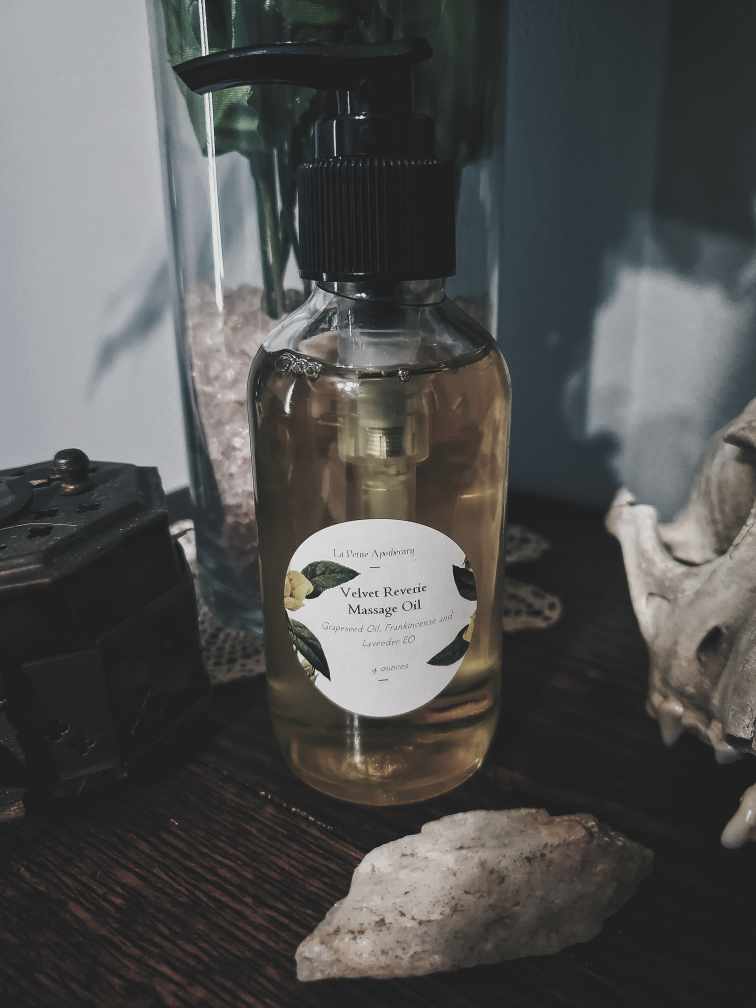
My pen pal, Angela, recently opened her very own witchy apothecary shop and I couldn't be more thrilled about her new adventure! Of course, I wanted to show support by reviewing some of her products and getting her name out there to all of you. If you liked Apothecary At Home and The Green Witch Co, then you will definitely love La Petite Apothecary!

Angela recently sent me some Velvet Reverie Massage Oil which contains grapeseed oil, frankincense essential oil, and lavender essential oil. Upon first applying the oil, I noticed it has a very light, yet refreshing scent. Unlike other similar products, the scent is not overwhelming, so if you are sensitive to strong smells, this is the oil for you. No scent headaches with this oil! I personally don't enjoy oils with heavy scents, so this is perfect for me. Frankincense improves circulation, thus helping reduce muscle soreness and easing tension. Lavender is naturally calming and anti-inflammatory, helping to alleviate pain related to stress and tension. Grapeseed oil is the perfect base for this massage oil as it not only helps moisturize the skin but also absorbs easily and quickly without leaving you feeling oily. This is definitely my preference when it comes to massage oils. Other natural oils often leave me feeling oily afterward and contribute to acne breakouts. Grapeseed oil, however, is naturally antimicrobial and helps manage acne breakouts, reducing the risk of breakouts after use. This combination of grapeseed oil, frankincense, and lavender is the perfect combination for a massage oil and I couldn't be happier with the product.

apothecary, herbal remedy, herbal medicine, tea, massage oil, relaxation, stress relief, witch, witchy, witchcraft, pagan, wicca, wiccan, green witch, hedge witch, kitchen witch

I work out 4-5 times a week, doing a combination of cardio and strength training. Furthermore, I am a very anxious person. Needless to say, I carry a lot of muscle tension and soreness in my shoulders and neck, sometimes from working out, sometimes from being anxious, and sometimes it's a combination of both. I often ask my partner to rub my neck and shoulders while we watch TV, and this massage oil has come in clutch the past week. It is an oil, so a little bit goes a long way. It warms quickly so I'm not shocked when it first touches my back, absorbs well, and leaves my muscles feeling like butter. I have also used it on my arms and legs to assuage the soreness I feel there and it's left my skin feeling soft and radiant. Even if you aren't into massages, this makes for a great after-bath/shower moisturizer, especially before bed. For just $25 you get enough massage oil to last you several months, if not a year, making it well worth the purchase.

apothecary, herbal remedy, herbal medicine, tea, massage oil, relaxation, stress relief, witch, witchy, witchcraft, pagan, wicca, wiccan, green witch, hedge witch, kitchen witch

Angela also kindly sent along a sample of her handcrafted Sleepy Time Tea, which contains chamomile, lemon balm, catnip, oat straw, passion flower, hop flower, and valerian root. Each of these herbs is well known to reduce stress, enhance relaxation, and promote restful sleep. It has a light floral flavor and combines well with a splash of milk. It's naturally sweet, but I find it's even better with a dash of sugar or honey to enhance the flavor. Not to worry, sugar/honey doesn't actually disrupt sleep and doesn't make you hyper, contrary to popular belief.

On top of all of this, the products came packaged in biodegradable packaging! I love this and wish more businesses would turn to natural, biodegradable packaging. As a witch, I believe in reducing my ecological footprint as much as possible in this capitalist hellscape. I find this to be an act of worship for the Earth and the nature spirits around us. But I digress!

apothecary, herbal remedy, herbal medicine, tea, massage oil, relaxation, stress relief, witch, witchy, witchcraft, pagan, wicca, wiccan, green witch, hedge witch, kitchen witch

If massage oil and tea aren't your thing, La Petite Apothecary offers a host of other wonderful herbal products to choose from, including balms for bruises, achy joints, bug bites, burns, cuts, and even poison ivy, as well as eczema cream, bug repellants, and vapor rub. If you use the link I have provided, you will receive 10% off your order from La Petite Apothecary, courtesy of Angela herself. I know you will not be disappointed by her products.


If you liked this post and would like to support future content, please consider leaving a small tip in the jar. 

Wednesday, August 4, 2021

Apothecary: Calendula Healing Salve

apothecary, herbal remedy, herb, healing salve, salve, calendula

Working in the garden, my hands often take a beating from cuts, insect bites, and splinters. The wet soil and constant watering also have a habit of drying out my nail beds, causing the dreaded hangnails to form. In the winter, my partner's hands end up a chapped and painful mess of cracked skin. This is where my handy calendula salve comes in. This, along with my yarrow salve, are the two salves I turn to the most when treating minor skin problems. And, like my yarrow salve, this salve is super easy to make!

Calendula Healing Salve

Ingredients
Dried calendula flowers
Carrier oil (I used olive oil)
1 oz beeswax
Sterilized 4 oz jar
Sterilized 2 salve tins

Directions
Fill the 4-ounce jar 3/4 of the way full with the dried calendula flowers. Cover completely with your carrier oil, seal, and give it a good shake while visualizing the oil infusing with healing energy. Place in a warm sunny window for 4 to 6 weeks, shaking daily. Remember to continue visualizing the oil infusing with healing energy every time you give the jar a shake. You can also say a quick chant along the lines of "Calendula yellow and bright, infuse this mixture with healing light." To speed up this process, you can heat the oil and herb mixture on low and simmer for 30 minutes, stirring clockwise to infuse the mixture with healing energy.

Once the oil is sufficiently infused, strain the liquid and combine with the beeswax in a double boiler. Heat the beeswax and oil on low until the mixture is well combined stirring clockwise to bring health, wellness, and healing to you. You don't want to overheat the mixture otherwise you will reduce the effectiveness of the salve. Immediately pour into your salve tins and store them in a cool, dark place for up to a year.

This particular salve is perfect for dry cracked skin, rashes, swelling, acne, stings, scrapes, chickenpox, eczema, cradle cap, and other skin ailments. 

How It Works

Calendula is naturally antiseptic, anti-fungal, and anti-inflammatory, which makes it perfect for treating skin wounds. It keeps harmful bacteria and viruses from infecting the wound while reducing inflammation and promoting cell repair and growth. Combined with a moisturizing oil and beeswax, the salve is able to form a barrier between the skin and the environment without clogging your pores. Furthermore, beeswax is naturally anti-inflammatory, thus reducing swelling and inflammation, and also high in vitamin A which is needed for cellular reconstruction. Together, these ingredients make a powerful topical healing salve, perfect for most skin wounds. 

Because I used olive oil, I wouldn't suggest using this salve to treat burns. However, if you picked a different carrier oil suitable for burns such as jojoba, go for it! Just be sure to research oils safe for burns before using it on a burn otherwise you will end up trapping the heat in the skin and making the burn worse and slowing the healing process significantly.

apothecary, herbal remedy, herb, healing salve, salve, calendula

Is there a particular way you use calendula? Do you have a different recipe for healing skin wounds? Share in the comments below!


If you liked this post and would like to support future content, please consider leaving a small tip in the jar. 

Monday, March 30, 2020

Apothecary At Home: A New Subscription Box for the Budding Herbalist

subscription box, herbal remedies, herbal medicine, witchcraft, herb magic, green witch, kitchen witch, hedgewitch

I am super excited to share a new subscription box that will be launching later this year with all of you. Apothecary At Home is an upcoming month-to-month subscription box that will introduce aspiring healers to Western Herbalism. Each box will contain 1-3 herbal allies, seeds, growing materials, medicine-making projects, and study resources designed to teach you herbalism from the comfort of your own home. I am a huge supporter of hands-on-learning and strongly believe in teaching someone how to fish rather than simply handing them a fish. Many herbal subscription boxes on the market send you a box full of already made remedies in the hope that you'll come back to buy more of their products when you run out. Apothecary At Home takes this idea and turns it on its head by teaching you how to become the herbalist. Better yet, it's a small business, created and founded by witches just like you and me.

You can sign up to receive updates about the box and possibly win a lifetime subscription on their landing page now. You can save 15% on your first box using code WILLOW15. I'm so excited about this box, and can't wait to review the first box!


Monday, September 2, 2019

Apothecary: Yarrow Salve

Apothecary: Yarrow Salve

This year, my yarrow has grown and bloomed multiple times. I actually have three different types in my yard: pomegranate, yellow, and white. All of them are beautiful and the white yarrow in the backyard has started growing outside of the planter, which is totally fine with me, although the guy that mows my lawn mows right over it. Oh well!

Yarrow can be used for a variety of medicinal purposes, but today we are going to focus on how to make a yarrow salve. This salve is perfect for cuts, scrapes, bruises, bug bites and stings. Do not use this salve for burns as the oil will trap the heat.

Yarrow Salve

Ingredients
1 1/2 cups olive oil
2 cups yarrow leaves and flowers, roughly chopped
1/4 cup beeswax pellets (more if you want to produce a thicker salve)

Directions
Begin by gathering and cleaning your yarrow. Be sure not to confuse yarrow with hemlock, which looks very similar. Here is a great video helping you identify each plant. If you are unsure of what you are picking, order some yarrow online instead. Once the yarrow is dry, remove the stems and flowers and roughly chop. Place the chopped yarrow in an airtight container and cover the yarrow with olive oil. It should take around 1 to 1 1/2 cups to completely cover the yarrow. Seal the container and allow to infuse in a cool, dark place for about four weeks (1 month). This is a great salve to begin on the New or Full Moon.

After the mixture has infused for at least four weeks, strain the leaves and flowers from the oil into a saucepan. Add the beeswax and heat the liquid until the beeswax completely melts. Once completely combined,  pour the oil mixture into a sturdy salve container. I prefer glass as the plastic chemicals are not able to infiltrate the mixture if you use glass. However, if you go with plastic, choose a container with sturdy, thick sides, as the plastic will melt when you had the hot oil to it. Allow to sit, either at room temperature or the fridge, until the mixture as solidified. Use as needed. This should keep for about 6 months to a year, especially if you keep it in the fridge.


Tuesday, November 20, 2018

Apothecary: Sore Throat Remedy

Apothecary: Sore Throat Remedy

I was sick for about a week and a half with what I originally thought was tonsillitis. After a couple of days, it turned into a sinus infection. Thankfully, I know exactly what to do when I start to get sick, especially when my throat begins to hurt. Please note that this is not intended as medical advice and you should consult with your doctor before trying the remedy listed below. If you are running a fever, you need to seek medical attention. Antibiotics aren't terrible. In fact, they are life-saving, so if you need some, make sure you get them!

Sore Throat Remedy

Ingredients
3 tbsp minced garlic
1 tbsp cayenne pepper
real honey to taste

Directions
Mix the garlic and cayenne together until well combined. You can use fresh or jarred garlic. There really isn't a difference in effectiveness. Add at least a teaspoon of honey, if not a tablespoon or two, to taste. This is super, super spicy without the honey, so be sure to add enough to dull the spice and sweeten the taste.  Take 1 tablespoon every 3-4 hours after eating. Too much garlic on its own can upset your stomach.

This remedy is great for adults and children. Unless you are allergic to one of the ingredients, there is little risk, other than an upset tummy, to using this remedy freely. It should be noted children until the age of one should NOT eat honey, so avoid giving this remedy to a small child. Also, should your symptoms worsen or you begin to run a fever, you should definitely seek medical attention. Sometimes antibiotics are best. It's the difference between living our best life and dying.

How It Works

Garlic is one of the most universal herbs on the market and has been recognized by herbalists and scientists as one of the most effective antimicrobial plants, acting to help kill bacteria, viruses, and parasites. Because of its unique properties, garlic is the perfect remedy for a sore throat, whether it be brought on by a bacteria or virus.

Cayenne, on the other hand, is a stimulant, increasing blood flow to help speed up the healing process. Like garlic, cayenne is also naturally antiseptic, helping to kill bacteria and viruses lurking in the throat.

And finally, raw honey! Honey is also naturally antiseptic, working with garlic and cayenne to fight off the infection. It is also anti-inflammatory, helping reduce swelling of the tonsils and coating them to reduce irritation. Of course, the honey also dulls the spice of the cayenne, making the whole remedy more palpable. A spoonful of sugar helps the medicine go down, right?

***

Is there a particular way you ward off a sore throat? I'm always looking for new recipes!


Wednesday, August 27, 2014

Apothecary: Syrup of Figs

Herbal Remedy: Syrup of Figs

I mentioned in my Herbarium: Fig post that figs can be taken in a syrup form to treat constipation. There are two different types of fig syrups. The first, Syrup of Figs, should be taken by children and delicate persons, such as the elderly. The second, Compound Syrup of Figs, should be taken by healthy adults.

Syrup of Figs

Ingredients:
     2/3 ounce dried senna pods
     1/2 cup boiling water
     1/2 cup sugar
     8 fresh figs, quartered
     Juice of 1 lemon


Directions:
  1. Place the senna pods in a glass bowl and pour boiling water over them. Let them steep for 30 minutes. Strain through a sieve or muslin into a blender. Add sugar and figs and blend until smooth.
  2. Pour into a saucepan and heat slowly on med-low heat to reduce, stirring occasionally, about 25 minutes. Do not boil. Should be thick, sugar-like syrup. Add lemon and remove from heat. Pour into a sterilized bottle.
  3. Shake well before use. Take 2 teaspoons when needed but no more than 3 times a day. Can be stored in the refrigerator for 3-4 weeks.
To make Compound Syrup of Figs add two finely chopped stalks of rhubarb to the blender

Good luck making your own! Let me know if you try this recipe and how it works for you!


Sunday, August 17, 2014

Apothecary: Cinnamon Cough Remedy

This week both of the girls I nanny came down with a cough and runny noses. Needless to say, by the end of the week I too had a runny nose, cough, and a fever. Not fun! I don't like to take medications unless I absolutely have to, so this weekend I have been drinking lots of warm water with honey and lemon and using my Cinnamon Cough Remedy. It doesn't taste the best, but it works.

Cinnamon is used to treat a variety of ailments particularly those pertaining to the digestive, respiratory, and circulatory systems. It is an anti-inflammatory, antibacterial, and expectorant, making it ideal for treating coughs.

Herbal Remedy: Cinnamon Cough Remedy


Ingredients
     1 tablespoon ground cinnamon
     1 tablespoon raw honey
     1 cup warm water

Mix and drink twice a day to soothe cough and cold.

****

I have a hard time drinking it all because I am not a huge fan of cinnamon, let alone a whole tablespoon of it. Flu season will be upon us soon and with little ones back in school, the likelihood we will all be having a cough is high. Keep this in your arsenal of herbal remedies this season to reduce symptoms and fight infection.