SOCIAL MEDIA

Showing posts with label The Pagan Experience. Show all posts

Saturday, January 30, 2016

DIY Candle Wheel

DIY Candle Wheel

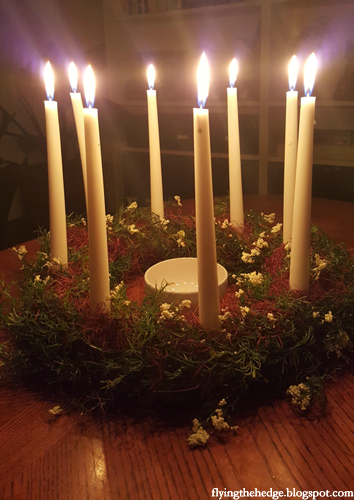
Imbolc marks the first of the fire festivals with candles being the central focus of sympathetic magic performed during this time. An old Imbolc tradition is the candle wheel, which can be either worn or used as a decorations on altars, tables, or windows. I created mine to be placed on the coffee table in our library/living room.

DIY Candle Wheel

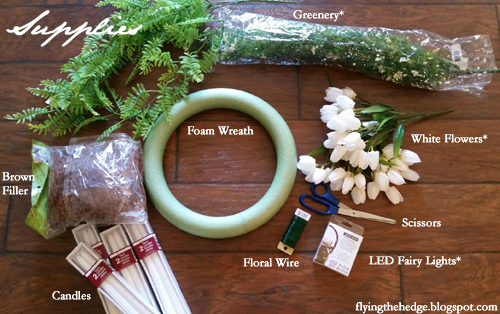
Supplies:
14 inch green foam wreath
8 white taper candles
Brown vase filler (straw)
Greenery*
White Flowers*
LED fairy lights*
Scissors
Floral Wire

First, line up your candles around your wreath. I placed one at the top, bottom, left, and right then added candles in between. After you have spaced them, push the candles into the foam to mark the ring you will cut out.

Next, cut out the candle holes using your scissors or a knife. You will need them to be at least a half an inch deep. After you have a rough hole, push your candles into the holes and press hard, making sure not to wiggle the candle. This will create a snug, flat candle holder in the foam wreath. Remove the candles.
DIY Candle Wheel

After I cut my candle holder holes, I wrapped the wreath is the brown straw vase filler. You can find this in the wreath and moss section of Michael's. I did not glue mine down, but if you have spray glue, I highly recommend using it to ensure the straw does not fall off. If you are using the fairy lights, wrap them around your wreath next. However, the 32 inch long strand I bought was not big enough to wrap around the wreath, so I am going to return them. Next, wrap your greenery of choice around the wreath and place flowers throughout. You will see I didn't use my ferns or flowers. After adding the one greenery with white flowers, I felt my wreath was perfect. Make it your own.

Next, you will want to wrap your wreath in floral wire. I stuck the first end into the foam wreath and tightly wrapped the floral wire around, making sure to secure the straw and greenery. I wrapped the lose end of wire around itself to secure it.
DIY Candle Wheel

To finish your wreath, heat the bottom of each candle until it begins to drip. Quickly place the candles in their holders. Heating the bottom will cause the candles to stick to the wreath, ensuring they won't topple over or fall out while moving the wreath. However, it is not so secure that you can't easily remove them to replace candles or store the wreath.

DIY Candle Wheel

DIY Candle Wheel

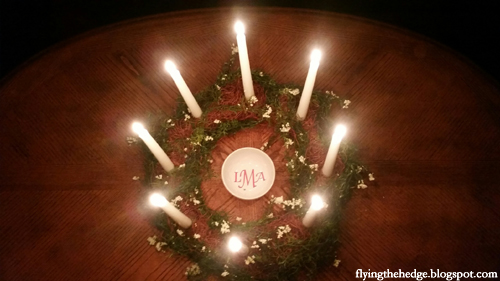
I placed a bowl in the center as an offering dish. As you can see it has my initials on the bottom. My boss gave the dish to me as a Yule gift, and I thought it would make a great offering bowl.

DIY Candle Wheel

And there you have it! A gorgeous, one of a kind candle wreath for your Imbolc celebrations! Good luck creating your own. I would love to see your candle wreaths!

CAUTION: This is highly flammable. Do NOT allow the candles to burn all the way down. Do NOT leave unattended.

Monday, September 14, 2015

Craftful Teachers

This is going to be a very honest post and some of you may laugh at my humble pagan beginnings. Honestly, this is extremely difficult to write because I am, well, embarrassed. I started dabbling in paganism when I was in high school. I knew from a young age I did not believe in "God." My family never went to church and the couple times I went with friends I left with more questions than answers. I tried, I really did, to be a Christian. I tried to believe the Bible and it's teachings. I tried to be a "good" person because everyone around me was Christian. Well, that's not entirely true. My mom believes, but she doesn't attend services or read the Bible. My dad doesn't know what to think and probably doesn't care either. But for the most part, everyone I knew went to the same church, attended the same youth groups, and prayed around the same flag pole every morning together. The older I got, the more I despised their practices. I watched as many of my "friends" became obsessed with trying to convert me, telling me I would spend forever burning in hell if I didn't come to service on Sunday or youth group on Wednesday or pray with them each morning. I watched these same "friends" ostracize others, especially those of color or a different sexual orientation. I watched "good" people turn into the exact opposite of good.

The more I pondered religion, the more I came to dislike it. However, I knew I wanted something. There is very clearly a void in every single human being to ever walk this planet. We want to know why. Why are we here? Why do bad things happen to us? Why do we suffer? Why do we live? Why do we die? And of course, is there something more than this? My husband fills his void by convincing himself there couldn't possibly be anything more than this right now. Like me, he is very scientific, but unlike me, he has absolutely no spirituality. It works for him and many other atheists, and that's great. It doesn't work for me. While I don't believe in divine beings, I still craved filling my void with something. That is where paganism came into the picture.

While in high school I visited Borders (the old bookstore) often. One day while walking to the bathroom a white book caught my eye. Teen Witch. I stopped. "Huh." I thought, "What's this about?" I picked it up and read the back cover. It was as if the sky opened and trumpets sang from the heavens. I forgot all about going to the bathroom and walked straight to the counter to purchase it. Yes, the book that started it all was Teen Witch by Silver Ravenwolf. I know, she is not the best person to take advice from, but at the time she was the most important pagan teacher in my life. I read several of her books. I carried Teen Witch with me everywhere, and I mean everywhere. Despite the criticism Teen Witch received, it spoke volumes to me when I needed it most. Silver did a great job relating it to a religion I already understood: Christianity. Up until this point I had no idea what Wicca was and thought witchcraft was only something practiced in the movies. I knew bits and pieces about other world religions, but my foundation was Christianity. I know many people hate this book for the exact reason I liked it most as a teen. If I had not seen her book that day 10 years ago, I'm not sure what path I would be on.

While I am no longer Wiccan and have made some serious leaps and bounds in my spirituality, I won't ever forget my humble beginnings. A couple years ago I very reluctantly donated Teen Witch to Goodwill. It was hard to drop it in the donation box, but I knew it was time for it to change another teen's life.

So there you have it. The most influential pagan teacher in my life is Silver Ravenwolf, one of the most criticized and down right hated pagan authors on the planet. But it's okay. It's my story, my beginning, and I doubt I am alone in it.


Tuesday, August 11, 2015

Continuous Learning

One of the greatest things about paganism and witchcraft is the diversity of it. Paganism describes any religion that is NOT Christianity or Judaism, although I think most modern people also exclude Islam as it very closely related both Christianity and Judaism. So paganism includes everything from Wicca and Druidism to Native American and Aztec to Buddhism and Hinduism. It's a very beautiful thing if you think about it. Every culture in the world has had some form of religion, including our prehistoric relatives. How do we know this? We have found burial sites where the dead were buried with flowers and possessions, a sign that they very likely believed in something more than our time here on earth. But what makes paganism so beautiful, is also a draw back.

There is no one set path in most pagan religions. Very few have written holy books like the Bible or Qur'an, making it difficult for many to find their way. Furthermore there are so many fields you can study, like runes, tarot, astrology, and witchcraft, that it can be overwhelming, even for an expert. So how do you pick what to study? How do I decide? I listen to my heart.

I know; that sounds kind of funny. Even reading it out loud made me chuckle a bit, but it's the truth. Sometimes I am just lying in bed at night trying to fall asleep and out of no where I have the urge to design my own runes. And I did. It took me time to gather the stones I wanted and create them, but I did it. I haven't had too much desire since I made them and cast them for the first time to use them again though. Sad right? However, the reason I cast them was extremely important and set in motion this year's events. While stressful, everything I am doing right now is going to have major pay offs. Other times I am on Pinterest looking at random pictures and I get an idea that I just can't shake. Right now I am really interested in organic gardening. I didn't grow anything this year, but with moving I know next spring things will be more stable, and I will hopefully have the space and sun for a beautiful garden.

After I have a topic, I begin my research on the internet. This is honestly the best way to find things. In fact, I try Pinterest first because bloggers tend to have the most experience with things and they tend to be honest. Websites from Google are great, but if I am looking at painting a fabric chair, the blogger who told me her mistakes and what she will do differently next time is far more helpful that a set of directions. Next I turn to books. I browse Barnes and Nobles to find new titles and spend a long time on Amazon reading reviews and ordering books. Books are probably my biggest weakness, but they are great concentrated sources of information. If you are researching pagan topics, books tend to be more in depth, unless you buy a beginner witchcraft or Wiccan books. Beginner books scratch the surface of many topics, but can lead you to other wonderfully in depth books if you check their references and suggested reading lists. If you are looking for a place to start, check out my Knowing Thy Craft post. If I am hitting a dead end, sometimes I will visit my local metaphysical store and ask if they know anything or can point me to someone who does. It is amazing how willing others are to share their knowledge with you. Never be afraid to ask for help.

I have a long list of things I am currently looking into, including why and how witches cast circles, the meaning of trees and plants, herbal remedies, homesteading, organic gardening, and raising chickens and bees. Many of these topics will likely find their way into my blog, so keep an eye out for those posts.

How do you decide on a topic for continuous learning and where do you start you research?


Sunday, May 17, 2015

Invocation of the Sun King

Invocation of the Sun KingApart from Samhain, the Summer Solstice, or Litha, is my favorite holiday. Beltane follows very closely (if isn't tied with Litha), although I was unable to celebrate it this year. There is something about fires, warmth, outdoor festivities, and fresh summer blueberries and watermelon that excites me beyond belief and fills me with strength. Furthermore, my depression vanishes during these couple of months, giving my body and mind a break. The Horned God coming into his brightest moment as the Sun, is also intriguing. I've mentioned several times I don't believe in the literal existence of the deities, but their metaphorical existence is very powerful, and their stories hold great meaning in regards to the changing of the seasons. I don't mind celebrating the holidays with them in mind. It brings something special to them in my opinion. Plus, who doesn't love a good story?

In honor of the Solstice quickly approaching, and that fact that The Pagan Experience post for this week is on deities, I have decided to write an invocation to the Sun King. Feel free to use this in your rituals, prayers, or whatever this sabbat.

I call upon thee great Sun King,
Shining bright for all to see.
I invoke your power on this night,
To infuse this land with all your light.
Come to me, where your praises are sung,
To your altar where flowers are hung.
By the sun kissed meadows and distance moors,
I invite you to my welcoming shores.
On this night, I call to thee,
To bring about peace and harmony.
As you warm the summer air,
I sing to you your golden prayer.
Oh brightest of gods, on you I call,
Bring blessings to thy creatures all.

So this is the first time I have written an invocation. I look forward to being able to use it myself this year. It took a lot more effort than I thought, but it may be related to my husband playing Halo in the other room and my wish to join him!

Do you invoke the Sun King during the solstice? What invocation do you like best? I'd love to hear from you!

Sunday, March 1, 2015

Knowing Thy Craft

List of Books and Blogs for Witches and Pagans

 I AM NO LONGER UPDATING THIS LIST. I AM WORKING ON COMPILING A MASTER LIST AS WE SPEAK. IT SHOULD BE AVAILABLE IN 2019. TO SEE MY MOST UPDATED LIST OF RECOMMENDATIONS, PLEASE SEE MY RESOURCES PAGE.

Unlike many other spiritual paths, paganism and witchcraft, although not a religion, have no one book to guide us. This can make it increasingly difficult for new witches and pagans to get started. With all the information floating around out there, it can be overwhelming to newcomers. Where do you start?

I always, always, always suggest books first. While the Internet is a great thing and blogs like mine are becoming an increasingly valuable resource, there is a lot of misinformation floating around. Yes, some books contain this same misinformation, but books are generally written by witches and pagans who have been practicing most of their lives. They are extremely well versed in their craft and have extensive tested knowledge and wisdom to share. Furthermore, they often contain very accurate correspondences, ritual guides, spells and outlines, and other pertinent information for beginner witches.

In today's post, I would like to share my library with you. Mind you, my collection is small. I tend to buy what books call to me when they call. Let's just say, it's not often I feel the need to buy a book about my craft. My list here is in alphabetical order. I have labeled my must haves and ranked each with stars (5 being the highest and 1 the lowest).

Disclosure: Some of the links below are affiliate links, meaning, at no additional cost to you, I will earn a commission if you click through and make a purchase.

MY LIBRARY

Crystals for Beginners: A Guide to Collecting and Using Crystals and Stones by Corrine Kenner (****)- This short, comprehensive guide is a great introduction for any witch interested in using crystals in their magical practice. The only downside to this book is there are no pictures of the crystals in question, making it hard to identify crystals you may already have or encounter during your practice. You can read my full synopsis here.

Cunningham's Encyclopedia of Magical Herbs by Scott Cunningham MUST HAVE (*****)- Every hedgewitch needs to know the magical uses of herbs. There is no better book on the market regarding the magical uses of herbs. This is a must-have in EVERY witch's library.

Garden Witchery: Magic From the Ground Up by Ellen Dugan MUST HAVE (*****)- Flowers, trees, and herbs are part of every hedgewitch's repertoire, making this wonderful little book a must have. Dugan covers everything from herbal correspondences and flower language to practical growing advice and magically planning your garden. While there are undertones of Wicca, the book is not pushy with the subject. It is easy to read, delightfully engaging, and full of useful information for both beginner and advanced witches. Read my full synopsis here.

Hedge Riding by Harmonia Saille (****)- This is a must have for any hedgewitch, but I did not list it has a must have because other witches and pagans won't benefit from its contents. Harmonia has done it again. This short book is a great introduction to hedge riding, how to do it, and the different realms hedgewitches travel to when hedge riding. It's easy to read and understand and great for any level hedgewitch. Read my full synopsis here.

Hedge Witch: A Guide to Solitary Witchcraft by Rae Beth (***)- I was really hoping to like this book more than I did. This is NOT a guide on hedgecraft, but instead solitary Wicca. Beth gets most of the history of hedgecraft wrong and the rituals are very complicated and too formal for most hedgewitches. If you are into the Wiccan rituals and are more experienced, this is the book for you. The trance or meditation exercises are totally worth reading. They were very well explained and easy to follow. No matter where you stand on the meditation scale, these exercises are great for everyone. This is written in letter form, so be prepared to organize the book with sticky notes. You can read my full synopsis here.
Hedgewitch: Spells, Crafts, and Rituals for Natural Magic by Silver RavenWolf (***)- While I know there is a lot of controversy surrounding Silver, I have always loved her writing. This book is no exception. This is a workbook. You work through several lessons over the course of days, weeks, or months depending on your choice, and slowly build your witch's cabinet while exploring some aspects of hedgecraft. This is to help experienced witches or those who are already familiar with the craft. This is not for beginners, even if she says it is.

Hedge Witchcraft by Harmonia Saille MUST HAVE (*****)- While this book is a very short and basic introduction to hedgecraft, I believe every witch should read it. Why? Because it is the most accurate book on the market regarding what a hedgewitch is and what they practice (unless I decide to write my own book. Haha!) It provides a wonderful list of trees and herbs hedgewitches commonly use, a description of the sabbats according to one hedgewitch, and explains the elements. I really enjoyed this book and wish that it was longer! Read my full synopsis here. PS: You may see on the Amazon reviews that I ripped someone a new one. If you are going to review a book, at least know what you are talking about people!

Magical Housekeeping: Simples Charms and Practical Tips for Creating a Harmonious Home by Tess Whitehurst (****)-Whitehurst is a master when it comes to creating a harmonious home. She mixes many ancient traditions, including Buddhism, Feng Shui, witchcraft, and more to help you make a happy, prosperous home. This is again for more experienced witches. This is not a guide on the craft but an addition to it.

Practical Shamanism: A Guide for Walking in Both Worlds by Katie Weatherup (***)- I really wanted to enjoy this book more than I did. However, Part I is worth purchasing the book for. Weatherup gives complete instructions in Part I on how to journey, and her interpretation of entering the Otherworld was actually beneficial to me as a hedge rider. Parts II and III were less enjoyable and vague. This book is great for a beginner, intermediate, and advanced witches interested in shamanic journeying or hedge riding (they are both very similar). You can read my full synopsis here.

Sabbats: A Witch's Approach to Living the Old Ways by Edain McCoy (****)- McCoy covers all the pagan holidays in order in this wonderful book. She covers their history and lore, rituals, spells, traditions, crafts, and recipes. This book is a stunning compilation of knowledge and a great introduction to the holidays you can celebrate to honor the god and goddess or, in my case, the earth and nature. Some of the lore may be questionable.

The Complete Herbs Sourcebook by David Hoffman (****)-This is not a pagan book, although it contains strong pagan undertones, but I use it every time I write an Herbarium post. Hoffman explains the uses of herbs in medicine, even breaking down how they chemically react in the body. His entire book is easy to read and understand. He also provides information on harvesting, drying, and storing herbs, as well as the best methods of making infusions or tinctures. Hoffman's book is a wonderful addition to a witch's library, especially if you plan on using herbal remedies.

The Complete Idiot's Guide to Wicca and Witchcraft Second Edition by Denise Zimmermann (****)- There is a newer edition out, but I haven't read it. This may seem like a really odd book to appear here, but Zimmermann provides a lengthy history of witchcraft and paganism, great correspondence lists, a brief overview of the sabbats and the deities, and guides to spell work and rituals. She even includes spells you can reference and change to suit your needs. The self-dedication/initiation in this book is also very beautifully written and serves as a great reference for writing your own or using if you aren't creative. This was one of the most fascinating books I ever purchased on witchcraft. It is a wonderful learning tool.

The Magical Household by Scott Cunningham and David Harrington MUST HAVE(*****) - Easy to read and full of ancient folklore and tradition, this is a must-have in any hedgewitch's library. It covers everything from protection and cleansing to indoor gardens and moving. If you are not superstitious I suggest you pick a different book. Read my full synopsis here.

The Modern Guide to Witchcraft by Skye Alexander (****) - I didn't label this a must have for a couple (maybe insignificant) reasons, but I strongly recommend it. Easy, fun, and accessible to read for beginners and experts alike. This is an introduction to witchcraft, not Wicca, and includes accurate correspondences, spells, and explanations on a variety of topics. Skye does a great job introducing the craft and will inspire even the oldest witches to get out there are cast a spell or two! Read my full synopsis here.

The Sacred Round: A Witch's Guide to Magical Practice by Elen Hawke (***)- This book is said to be for advanced witchcraft, but there is nothing advanced about it. Instead, this book is a continuing introduction into Wicca and is full of misconceptions and false statements regarding witches in general. While the statements generally apply to Wiccans, it is important to note not all witches are Wiccans and vice-versa. However, there are some lovely sabbat rituals in the book that everyone can benefit from ready. Read my full synopsis here.

The Way of the Hedgewitch by Arin Murphy-Hiscock MUST HAVE(*****) - This is a wonderful introduction, although it focuses more so on hearthcraft than hedgecraft. It outlines deities (if you are into that), home magic, rituals, and recipes all hedgewitches should know. I have mentioned this book in previous posts, including my home protection ward and threshold protection spell. As I stated, this book is more about hearthcraft than hedgecraft, but it a must have in any hedgewitch's library.

The Witch in Every Woman by Laurie Cabot (***)- This is a very empowering book for women, especially those who are unsure of themselves. Cabot empowers women to reawaken their "magical nature through the feminine to heal, protect, create, and empower" by presenting a series of Celtic goddess short stories and lessons accompanied by her own thoughts and feelings. While slightly hetero-normative and dated, the book is a worthwhile read, but not a must-have for all witches. Need some empowerment? Unsure of yourself as a woman witch? Then this is the book for you. Read my full review here.

To Ride a Silver Broomstick by Silver Ravenwolf (**)- Like Teen Witch, some of the history, lore, and techniques are questionable. This book has worked for many and while I think that's great, I would be careful if you are interested in this book. I gave my copy to Goodwill. However, it is a series of lessons designed to help you work through the craft. Silver has a way with words so the book is enjoyable and easy to read. I do not suggest this book.

Teen Witch by Silver Ravenwolf (*)- This was one of the first books I turned to when I wanted to learn about Wicca and witchcraft. I do not recommend this book. While Silver means well, the book attacks Christians yet makes Wicca out to be like Christianity. Much of the history and techniques are questionable as well.

Wicca: A Guide for the Solitary Practitioner by Scott Cunningham (****)- I don't practice Wicca anymore, but if you are interested, again Cunningham takes the cake. This is a great introduction to Wicca, but also a great introduction to how to set up a ritual, how to perform spell work, and how to track your growth through the use of a Book of Shadows. Even if you aren't interested in the religious part of it, I still suggest reading this book for his expert knowledge on witchcraft.

Witches, Midwives, and Nurses: A History of Women Healers by Barbara Ehrenreich and Deidre English MUST HAVE (*****)- Okay, so this isn't strictly about witchcraft. Instead, it is a feminist piece from the 70s, but it is wonderful all the same. Despite some slight inaccuracies, this book gives a compelling rendition of women as healers through the ages. Witches, especially hedgewitches, were and are traditionally healers, making this book an excellent addition to any pagan library. When I finished, I felt compelled to buff up on herbal remedies and add some new information to my ever-growing library of healing. This book also put many historical events into perspective for me, giving me a much better understanding of where we began and how much things have changed over the centuries. Read my full synopsis here.

Your Book of Shadows: How to Write Your Own Magickal Spells by Patricia Telesco (***)-  I both loved and hated this book. The first chapter or two are definitely the best parts and worth reading if you get your hand on a copy. They provide wonderful insights into creating your own BOS/grimoire and provided me with some fresh ideas to get started. The rest of the book, while useful, is a basic introduction to Wicca. If you are new to the craft, this book would be a MUST HAVE. If you are an experienced witch, such as myself, only the first chapter would be particularly useful. Read my full synopsis here.


ONLINE SOURCES

There are also some online sources I would suggest apart from my own blog of course.

Penniless Pagan is another great blog for witches and pagans alike, whether you are starting out or advanced. It is especially useful if you are short on cash or don't believe your practice should cost money. Michaela is a wonderfully hilarious blogger who knows her craft well.

If you are more into cottage witchery, T.C. from The Witch of Lupine Hollow is the blogger for you. She is a wonderful writer, blogs often, and is a huge supporter of other bloggers.

Mark over at Atheopaganism is for those who, like me, don't believe in deities. He updates often and there is a great discussion taking place every day on the Facebook page.

You can't go wrong with Llewellyn Worldwide. They sell a variety of pagan, Wicca, and witchcraft tools and books. They also have wonderful articles that I have referenced before.

About.com's Pagan and Wicca section is very well put together and very accurate. A great resource for history, lore, and correspondences.

Pagan Bloggers is a new blog database with excellent posts from a variety of pagan. (I hope to be an author there in the future.)

Patheos Pagan, like Pagan Bloggers, is a blog database with content from a variety of pagans around the world.

With knowledge and practice come wisdom. If you are new or even experienced, learning more about your craft is the best thing you can do. Remember, your mind is a garden. Nurture it.



I will be updating this list as I find more books I think you should read and blogs I find useful.
2015 ADDITIONS
Hedge Witch by Rae Beth
The Magical Household by Scott Cunningham and David Harrington
2016 ADDITIONS
The Modern Guide to Witchcraft by Skye Alexander
Hedge Witchcraft by Harmonia Saille
Hedge Riding by Harmonia Saille 
Your Book of Shadows by Patricia Telesco 
2017 ADDITIONS
Garden Witchery: Magic From the Ground Up by Ellen Dugan
Witches, Midwives, and Nurses: A History of Women Healers by B. Ehrenreich and D. English
The Witch in Every Woman by Laurie Cabot 
Practical Shamanism: A Guide to Walking in Both Worlds by Katie Weatherup 
2018 ADDITIONS
The Sacred Round: A Witch's Guide to Magical Practice by Elen Hawke

 I AM NO LONGER UPDATING THIS LIST. I AM WORKING ON COMPILING A MASTER LIST AS WE SPEAK. IT SHOULD BE AVAILABLE IN 2019. TO SEE MY MOST UPDATED LIST OF RECOMMENDATIONS, PLEASE SEE MY RESOURCES PAGE.

Thursday, February 26, 2015

Dream Magic: Dream Stimulation

Dream Magic: Dream Stimulation

Dreaming is primarily an activity of the soul, offering a passport into the realm of magic. Just because dreams come naturally does not mean that dreaming isn't a skill you can hone. In fact, controlling and manipulating your dreams requires great skill and lots work. I have talked in the past about enhancing prophetic dreaming, and today I would like to talk about stimulating dreams in general. I know I need to post an introduction to dream magic, but I felt like posting some spells instead. Later I will cover what dream magic is and how mugwort is a witch's best friend, especially when it comes to dream magic.

There are several ways you can enhance dreaming including holed stones, dream baths, and dream incenses. Simple holed stones facilitate dream magic as much, if not more, than other precious gemstones. If you find a pebble or small rock containing holes, know it is a precious gift from the Earth. Not only do they enhance dreaming, but they also provide protection and clairvoyance. You can access the stone's dream power by wearing it around your neck, attaching it to your headboard or wall above your bed, or by placing it under your pillow.

For a dream bath, there are several recipes you can follow. Mind you these baths are meant to be relaxing, sensuous, and soothing so take your time. Use warm water to relax your muscles and help induce sleep. If you want, you can combine your bath with dream incenses. Make sure to take your bath right before bed. My favorite recipe is a Romantic Mugwort Bath. Be careful though. A side effect of this bath is sensual/romantic dreams so if you are hoping for something different a plain Mugwort Tea Bath may be best. For a Mugwort Tea Bath simply pour a cup of hot water over one teaspoon of dried mugwort and allow to infuse for 10-30 minutes or until cool. Add this infusion to your bath. You can add a few drops of mugwort flower remedy for added effect.

For the Romantic Mugwort Bath, place one handful of dried hibiscus flowers, one tablespoon of orange blossoms, one tablespoon of red rose petals, one teaspoon of dried mugwort, and three dried bay leaves in a pot of boiling water. Cover and allow the infusion to cool. Once cool, draw a bath and pour the infusion into it. You can strain the infusion if you like but you don't have to.

For dream incenses, you have several options. Burning the incense should occur right before bed, not while you are sleeping. Use common sense and safety people. You can burn bay laurel with cedar and storax gum resin to assist in dream recall, dream sharpness, and peaceful sleep; mugwort alone or with copal and mastic for psychic dreams; or acacia leaves with myrrh and star anise to contact someone who has passed over.

What do you use to enhance or stimulate dreaming?


Sunday, February 15, 2015

Deity Introduction: Ganesha

Note: This post contains potentially problematic practices or language, cultural appropriation, or misinformation. I have been working diligently to decolonize my practice, for which you can learn more about in my article Decolonizing Witchcraft: Racism, Whitewashing, and Cultural Appropriation in Witchcraft and How to Decolonize Your Practice. I believe in documenting my journey in witchcraft and that my readers can learn from my mistakes, so the posts will remain as a learning opportunity.

Deity Introduction: Ganesha

Ganesha, the elephant-headed Lord of Prosperity, Wisdom, and Obstacles, stands out among the crowd as the most beloved Hindu deity. He is personally one of my favorite deity mythos, and I am not entirely sure why. I have encountered Ganesha several times in history lessons and literature, but he stood out most brightly to me in the book The Book of Dreams by O.R. Melling. I'm going to be honest; I started the book 5 years ago and haven't finished. I should probably start it over, but I digress. In the book the main character Dana, the light-bearers daughter, sets out on a quest with a half wolf French dude to find the Book of Dreams and saved the world and the world of faerie from dark forces. On her journey, she meets many obstacles and at one point Ganesha appears to guide her on her way. He tells Dana that he is helping her in her quest only because one of his daughters, Dana's stepmother, honors him and by helping Dana and he returning his love to Dana's stepmother. He then tells her not to expect his help again as he is not her deity or part of faerie. I found this very intriguing that a deity would reach out to help another who did not honor him. Today I'd like to share a brief history of Ganesha and how you can call upon him to clear obstacles from your path.

Ganesha is the son of the primal deities Shiva and Parvati. He was born in his father's absence and grew up completely devoted to his mother. One day while he stood guard while his mother bathed, Shiva returned unexpectedly and demanded to see his wife. Ganesha, having never met his father, barred his way. Shiva ended the argument by cutting off Ganesha's head, but when it was revealed that Ganesha was his son, he vowed to replace his head with that of the first creature he saw: an elephant. Because he no longer appeared "godlike," Shiva decreed that no prayers would begin without first invoking Ganesha. The letter or symbol Om or Aum found at the beginning of almost all mantras is a tribute to and invocation of Ganesha. Today Ganesha is invoked before beginning any new endeavor or project so he will open the way.

During August or September, the holiday Ganesha Chaturthi is celebrated to honor Ganesha. Depending on when it falls it can last between 5-7 days or 10-12 days (usually 10 days). The festival involves placing clay images of Ganesha in public pandals, temporary shrines, and worshipping them with a variety of plants and leaves. At the end of the festival, the leaves are immersed in a body of water, usually the a lake, to purify the water. In the early years of the tradition, the water was their drinking source. Placing the blessed and medicinal leaves in it was believed to protect people from infections and viral diseases in the water.

You can request Ganesha's assistance with new projects and ask for his guidance on old projects you are stuck on. Offer him peanuts, golden raisins, and candy. You can also offer him leaves from 108 different plants to unblock your path. The most common mantra to invoke Ganesha is "Om Gam Ganapataye Namah," which means "Priase be to Ganapati." This is his mula or root mantra which is commonly used for yoga sadhana to merge oneself with Ganesha during practice. "Om Shri Ganeshaya Namah" or " Praise to Lord Ganesha" is the mantra used for invocation, adoration, and worship.

And to add an extra little tidbit, Ganesha's brother Skanda rides a peacock. Just so you know.

I hope this has been informative. Do you use Ganesha in your magic or yoga practice?


Monday, February 9, 2015

Sunday, February 8, 2015

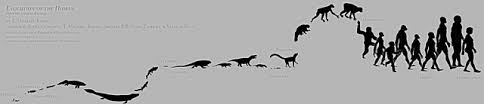
Humanity and Hedgecraft

 by T. Michael Keesey

Humanity has three definitions.
  1. the quality or state of being human
  2. the quality or state of being kind to other people or to animals
  3. all people
The second and third definition are easy. Humanity describes humans collectively and our actions toward other living creatures. The first definition, however, is much more complicated. What does it mean to "be human?"

I just started my Master's in Secondary Education. I have mentioned this countless times that my Bachelor's is in Biology, specifically Evolutionary Biology and that I view my spirituality on a biological basis. The first assignment I was given was to write a "Teaching Philosophy" regarding why I wanted to be a teacher and how I was going to meet my goals. I'm not going to lie; teaching is not my first choice. I want to be a paleontologist, but it seems the universe believes my gifts should be used to foster a love of science in others through becoming a high school biology teacher instead of a college professor and researcher. That's fine. I bring this up because I mentioned humanity in my paper and wanted to share what I said there with all of you.

"The only reason I have ever pursued science, specifically biology, is because it’s what makes the world tick; it’s the very foundation of every living thing on this earth. I find that to be breathtaking. I want to teach others biology, no matter what level, to add to the human experience. What makes us human? Biologically speaking, it’s the interaction of our environment, our cells, our DNA, and our atoms. Something as simple as working out can completely change the expression of our genes. The chemical interactions that occur instantaneously throughout our body and the world around us make us not only individuals but human. Of course, we are still learning, but we are getting closer to understanding ourselves more each day. I can’t even begin to explain how much I love biology and find it to be awe-inspiring. I hope through teaching that, maybe, just maybe I can foster this same love in another individual and add to the human experience in the process. This is the most important thing any teacher can do for their student. It not only gives them drive to continue learning but helps answer that question of what makes us human....

....I want students and hopefully by extension their family, to realize that biology does not have to be at odds with their beliefs. Personally, I am not a religious woman, but I know that many students entering my classroom are going to enter with the stigma that religion and biology cannot walk hand in hand. This is just not the case. In fact, the majority of scientists do not view the subjects to be in constant conflict as many people believe. In fact, many believe that science comes from God and the further you explore the closer you get to the divine."

To me, being human is the sum of our parts. Many say it's our ability to feel emotions, but anyone with a pet knows they get sad and angry and happy. Others say it is our ability to build and manipulate our world. Have you ever seen the intricate design of a termite mound or anthill? Still, others say it is our capacity to create and appreciate art. Ever seen an elephant paint? We are not the only ones to create masterpieces. But the most common answer is our cognitive ability to analyze and understand our world. Despite popular belief, this is not true either. Countless studies have shown that animals are able to remember, analyze, synthesize, and more, things small children struggle to do every day. We are not special, but we like to think we are because it gives many a sense of purpose.

This idea flies in the face of many religions, even paganism, but it doesn't have to. In fact, I think it brings us closer to our spirituality. Hedgecraft is a particular sect of paganism that I believe corresponds closest to this belief, hence why I practice hedgecraft. Hedgewitchery/hedgecraft is heavily nature-based and emphasizes our place in nature. It stresses working with the environment instead of against it while recognizing that we are not different from the rest of the living world. Instead of trying to get rid of your awful neighbors, it tells you to work toward an understanding. Many versions of hedgecraft, like my own, don't emphasize the divine, but instead the individual's place in our world.

I know many will disagree, and that is perfectly fine. We all view ourselves, our world, and our spirituality very differently. I hope that by reading this, you will understand the uniqueness of all beliefs, and maybe it will change the way you view things.

What does it mean to be human?


Monday, January 26, 2015

Bear Spirit: Lore and Summoning

For this week's Pagan Experience prompt, I would like to talk about Bears. Bears have a long and rich magical history, especially in association with healing magic.

Bear magic dates back as far as Paleolithic times with bear bones, mostly skulls, being found arranged in circles in caves across Europe. The Nivkh, a Russian semi-nomadic tribe, celebrate the bear by holding a festival between January and February in its honor. It is believed that bears are the earthly manifestation of Nivkh ancestors and gods. Bears are captured as cubs and raised by women in the village as if they were their own child. During the festival, the bear is dressed in ceremonial robes and offered a banquet. Afterwards it is killed and eaten in a religious ceremony presided over by a Nivkh shaman. In so doing, the bear's spirit is released and returned to the gods of the mountain. It is believed that if the bear spirit returns happy that the gods will bless the Nivkh with bountiful forests for hunting and fishing

The Finns performed a very similar ceremony upon killing a bear to let the bear's spirit know it is well respected by the people so that it would want to reincarnate back into the forest. Afterwards the bear was eaten, its bones buried, and its skull hung high in an old pine tree called a kallohonka (skull pine). This tree is considered the world tree and by hanging the bear's skull in it, which is believed to contain the bear's soul, its soul will be delivered back to the heavens.

Many other cultures also use the bear in their myths as well. The Greek goddess Artemis has a bear form for which the constellations Ursa Major and Ursa Minor are named after. The Greeks also held a festival in honor of Artemis by having two young girls (5 and 10) wear bearskin robes and perform a bear dance. The Thracians regarded the bear as a messenger for dead ancestors while the Celtic Gaul worshiped Artio as the goddess of wildlife, who like Artemis, has a bear form. Of course they appear in all Native American cultures, representing healing, strength, grounding, and ferocity.

Bears are acknowledged by many traditions as the totem animals for shamanic healers. They are often summoned during healing magic and herbalism to bring focus and rest. A popular theory is that bears taught us herbal knowledge. Whenever I make herbal remedies I always think about the bear as I work. Place a bear fetish in your herbalism work area or ask them for guidance during healing rituals. Action on behalf of bears' welfare and habitat may enhance your chances of success in healing magic.

To appeal to the bear spirit for guidance in healing magic, you will need a full frontal image of a bear so you are able to look directly into the bear's eye. Just before going to sleep, gaze into the bear's eyes while thinking about what information you require. Take as long as you need and treat this as a meditation. When you feel ready, place the image under your pillow and go to sleep. Insights and inspiration from the bears should appear in your dreams, even if bears do not.

Do you use the bear in any of your magical workings?


Sunday, January 18, 2015

Deity and the Divine? Not here!

Unlike many pagans, I do not personally believe in any deities. I am what is called a pagan atheist which is a foreign concept to many other pagans. When I first turned away from Christianity to pursue a path in witchcraft, I turned to Wicca. I tried desperately to believe in the God and Goddess, but no matter how hard I tried I couldn't connect with them or force myself to recognize their existence. After moving away from Wicca I tried to connect with other deities, especially those of the Celtic and Norse variety. My ancestors are Irish and Swedish so I thought maybe by connecting to my heritage I could connect with a deity as well. No luck, although I have to say I do love the idea of almost all of the gods and goddesses in these systems, especially Loki (but maybe that is because Tom Hiddleston is so fantastic?)

So as it stands I still have no god or goddess I believe in or turn to in my magical workings. I do however believe that every living and nonliving thing radiates with its own energy, not not necessarily in a divine way. I feel the power of the earth and the moon just as strongly as many people feel their god or goddess. I find the universe, in its infinite vastness, to be awe-inspiring and humbling. When in doubt, I find the world around me, especially plants, to be more than enough for me and my magical workings.

I know many people will say something along the lines of feeling their energy is feeling the god or goddess within them. Gods and goddess are divine in being; I don't find the earth, moon, universe, plants, or any other thing to be divine. That being said, it doesn't make these things any less amazing in my eyes. I have a science background, specifically evolutionary biology, and the ways in which everything comes together gives me goosebumps. I don't mind not having something divine in my work.

Maybe one day I will find one, but I am content not working with them at all. Hecate has always peeked my interest, but I have yet to attempt to make a connection. Maybe one day, eh?