SOCIAL MEDIA

Monday, March 30, 2020

Apothecary At Home: A New Subscription Box for the Budding Herbalist

subscription box, herbal remedies, herbal medicine, witchcraft, herb magic, green witch, kitchen witch, hedgewitch

I am super excited to share a new subscription box that will be launching later this year with all of you. Apothecary At Home is an upcoming month-to-month subscription box that will introduce aspiring healers to Western Herbalism. Each box will contain 1-3 herbal allies, seeds, growing materials, medicine-making projects, and study resources designed to teach you herbalism from the comfort of your own home. I am a huge supporter of hands-on-learning and strongly believe in teaching someone how to fish rather than simply handing them a fish. Many herbal subscription boxes on the market send you a box full of already made remedies in the hope that you'll come back to buy more of their products when you run out. Apothecary At Home takes this idea and turns it on its head by teaching you how to become the herbalist. Better yet, it's a small business, created and founded by witches just like you and me.

You can sign up to receive updates about the box and possibly win a lifetime subscription on their landing page now. You can save 15% on your first box using code WILLOW15. I'm so excited about this box, and can't wait to review the first box!


Thursday, March 26, 2020

Magical and Medicinal Uses of Tansy

tansy, herb magic, witchcraft, herbal remedies, hedgewitch, green witch, kitchen witch, herb

Gender: Feminine
Planet: Venus
Element: Water
Powers: Health, Longevity
Magical Uses and History: Tansy's scientific name Tanacetum vulgare comes from "Athanaton" meaning "immortal" or "immortality." According to Greek myth, Zeus made Ganymede, a youth he fell in love with, immortal by having him drink a juice made from tansy. However, tansy is regarded as toxic and has a history of being used as a poison for both humans and pests alike. It is likely Ganymede was made immortal through death. As such, tansy can be carried or worn to promote longevity or can be used in banishment spells to rid yourself of unwanted people, events, or spirits.

Despite being toxic, tansy is a preservative and was often used for embalming or during funeral rites because of its slow decomposition. The scent of the flowers was believed to help the spirits of the dead on their journey to the afterlife. They can be placed on an ancestral altar to honor loved ones or used to contact spirits.

Furthermore, tansy is an herb of Spring, signifying rebirth and renewal. Place it on your altar to honor Venus.

Tansy can be used in a number of spells including:
    Longevity Spells
    Death Magic
    Spirit Work
    Ancestral Veneration

Medicinal Uses: Tansy is most commonly used to treat intestinal parasites, specifically roundworms and threadworms. As a bitter, it can stimulate digestion and help ease dyspepsia or indigestion. Topically, tansy cream can be used to treat scabies. However, tansy is toxic in high dosages and should be used in moderation as it contains thujone, a psychedelic and poison. It can also stimulate menstruation and should not be taken by women who are pregnant or wishing to become pregnant.

Preparation and Dosage: Internally, tansy flowers can be taken as an infusion. Pour a cup of boiling water over 1 teaspoon of dried flower and allow it to infuse for 10 to 15 minutes. Drink up to twice a day. This infusion can also be applied to the skin to treat scabies.  As a tincture, take 1-2 milliliters of the tincture three times a day.


Want to print a copy of this for your Book of Shadows? Click below for your free copy!
tansy, herb magic, witchcraft, herbal remedies, hedgewitch, green witch, kitchen witch, herb, BOS page, tansy


If you liked this post and would like to support future content, please consider leaving a small tip in the jar. 

Monday, March 23, 2020

Spring Equinox Altar 2020

Ostara, spring equinox, altar, witchcraft, witch altar, sabbat, spring, witchy, occult, pagan, wicca, wiccan

Ostara or the Spring Equinox marks the first day of Spring in most traditions. It is a celebration of new life, fertility, prosperity, and abundance. The Sun begins warming the Earth, melting the snow and bringing with it an abundance of new life. Dandelions and daffodils bloom in full colors, trees begin to blossom, and the birds, bees, and rabbits return to feast upon the new blossoms. Because the Equinox is a time of equality, equal day and night, I wanted to create a balanced altar with some symbolism of this duality represented. I used traditional symbols of spring, including pinks, greens, and blues as well as eggs, rabbits, and flowers, all of which embody the spirit of Spring.

Ostara, spring equinox, altar, witchcraft, witch altar, sabbat, spring, witchy, occult, pagan, wicca, wiccan

1. White Candles- White is the color of purity and new beginnings. Life is starting anew as Spring arrives, and the flame represents the Sun who breathes life back into the Earth by fertilizing Her with His vibrant rays. The white sand in the bottom of the candle holder represents the last of the snow that is melting away, nourishing the soil with life-giving waters. I chose the iridescent candleholders because their colors remind me of Spring, the light blues, pinks, and yellows commonly associated with this time of year. (Where did I get it: Dollar Tree (2018-2020); Cost: $1 for each candle holder and $1 for all the candles)

Ostara, spring equinox, altar, witchcraft, witch altar, sabbat, spring, witchy, occult, pagan, wicca, wiccan

2. Marble Egg- The blue, marble egg is the ultimate symbol of fertility and new beginnings. As Spring begins, the birds flock back to their mating grounds, building nests and laying eggs that will give birth to the next generation. I placed it in the center of my altar as fertility is the predominant theme of Ostara. The blue color represents healing, calm, and femininity, something I believe is currently lacking in the world right now. (Where did I get it: Free; a gift from my family. It could easily be replaced with a plastic egg or a real egg for $0.25; Egg holder: Target 2018; $1)

3. Ceramic White and Gold Rabbits:  Rabbits, due to their rapid breeding, are strongly associated with fertility, new life, and new beginnings. They are also one of the first animals to appear in the spring, making them considered the harbingers of Spring. This year I chose to place both a white and gold rabbit on my altar. The white rabbit represents the purity of the Spring Earth and the rapid blossoming of the trees. The golden rabbit represents the nourishing rays of the Sun who showers the Earth with the abundance of His radiant glow. Together they represent the duality of equal day and night characteristic of the Spring Equinox. (Where did I get it: Hobby Lobby 2017; Cost: $3 each)

Ostara, spring equinox, altar, witchcraft, witch altar, sabbat, spring, witchy, occult, pagan, wicca, wiccan

4. Yarn Carrots- Carrots, with their phallic shape, represent masculinity, lust, and fertility. In fact, carrots are believed to cure impotence in men and increase fertility in women, making them the perfect addition to an Ostara altar. Furthermore, their orange color represents fire, passion, and the Sun.  (Where did I get it: Dollar Tree 2020; Cost: $1 for a package of 4)

5. Green Aventurine- The light hues of the green aventurine represent the new life sprouting up in the warming Earth and abundance. Furthermore, aventurine is known as a balancing crystal, helping to balance both masculine and feminine energy, making it the perfect crystal to represent the Spring Equinox. I placed two aventurine crystals on my altar to represent this duality and harmony between masculine and feminine energy. (Where did I get it: Metaphysical Store; Cost: $1 each)

Ostara, spring equinox, altar, witchcraft, witch altar, sabbat, spring, witchy, occult, pagan, wicca, wiccan

6. Pink Flower Incense Holder- In the center is an incense holder without the incense. I used it because of its pink color and flower shape. The flower represents the new blossoms of Spring, and being pink, it represents love and unity, which results in the flowering fruits so abundant at this time. (Where did I get it: Five Below 2019; Cost: $3)

Ostara, spring equinox, altar, witchcraft, witch altar, sabbat, spring, witchy, occult, pagan, wicca, wiccan

TOTAL COST: ~$15-16


Like my other altars, most of the items I use are found or purchased for around $1, although if the items must be purchased by you, then the cost will be higher. I hope you find this sort of break down helpful, especially those of you looking to create Instagram perfect altars on a budget!

How did you celebrate the Spring Equinox/Ostara this year?


If you liked this post and would like to support future content, please consider leaving a small tip in the jar. 

Wednesday, March 18, 2020

Book Review: The Sacred Herbs of Spring by Ellen Evert Hopman

Beltane, sabbat, herb magic, herbal remedies, book review, witchy, witchcraft, herb craft, magical herbs

Disclosure: Some of the links below are affiliate links, meaning, at no additional cost to you, I will earn a commission if you click through and make a purchase. I received a copy of this book from NetGalley in exchange for an honest review.

Yes, I know. A second book review in a row, but this is mostly what I have been doing to distract myself from some of the things going on in my life. In case you don't follow me on IG or FB, my youngest cat, Charlie, was recently at the emergency vet for several days. He is home now and doing well considering, but needless to say it was an extremely scary 4 days on top of COVID-19 closing almost everything around me, including my work. So reading and working from home is mostly what I have been doing to distract myself. But I am glad I've been reading because this book was great!

Hopman's previous book, The Sacred Herbs of Samhain, keeps popping up in my Amazon suggestions and I've seen it reviewed and posted about numerous times over the past couple of months. I am certainly interested in the book and when I was given the opportunity to review her newest book, The Sacred Herbs of Spring, I jumped on the opportunity. I was not disappointed! Hopman is a Druid and master herbalist, and it shows in her writing. Each chapter is filled with herbs and plants scared to Beltane based upon what you can use them for. Much like my herbarium posts, Hopman discussed each plant's folklore and their medicinal uses. For many of the plants, she also includes delicious recipes for culinary dishes as well as herbal remedies. Each description also comes with an extensive warning, allowing the reader to make an informed choice as to which plants they may or may not want to use. Furthermore, Hopman includes extensive research and cites her sources faithfully. As a scholar, I greatly appreciated her attention to detail.

My favorite chapter was over herbs to use to contact spirits and the Otherworld, but I felt some of the entries were lacking. There was much more Hopman could have included in this chapter, but for those interested in Otherworldly travel, it's a great introduction to some of the herbs you can use. Apart from otherworldly travel, Hopman also includes extensive sections on protection, clarity, love, and to attract nature spirits. She ends the book with a discussion of Beltane traditions, folklore, and foods. Her writing style is authoritative and scholarly but not boring. She weaves a story about each herb, sucking the reader in. I gobbled this book up in three days and strongly encourage anyone interested in plant folklore or herbal uses purchase this book up!

My only complaint about the book is that it does not, in fact, include a detailed description of what the plants look like. While I know a lot about herbs, there were some that I was not sure what they looked like and found myself Googling them. The temporary ARC I read had botanical prints at the beginning of the book, but not paired with the herbs in each chapter. I strongly encourage readers, especially those with limited herbal knowledge, to pair this book with a companion field guide. Hopman includes all the scientific names, so using a field guide should be rather easy. When it doubt, avoid using an herb unless you are 100% sure you are picking the right thing. Buying online from a reputable dealer is best for those unskilled in herbal identification.

The Sacred Herbs of Spring by Ellen Evert Hopman is available for pre-order now and will be released on May 1st, 2020 so pick up your copy today!


If you liked this post and would like to support future content, please consider leaving a small tip in the jar. 

Thursday, March 12, 2020

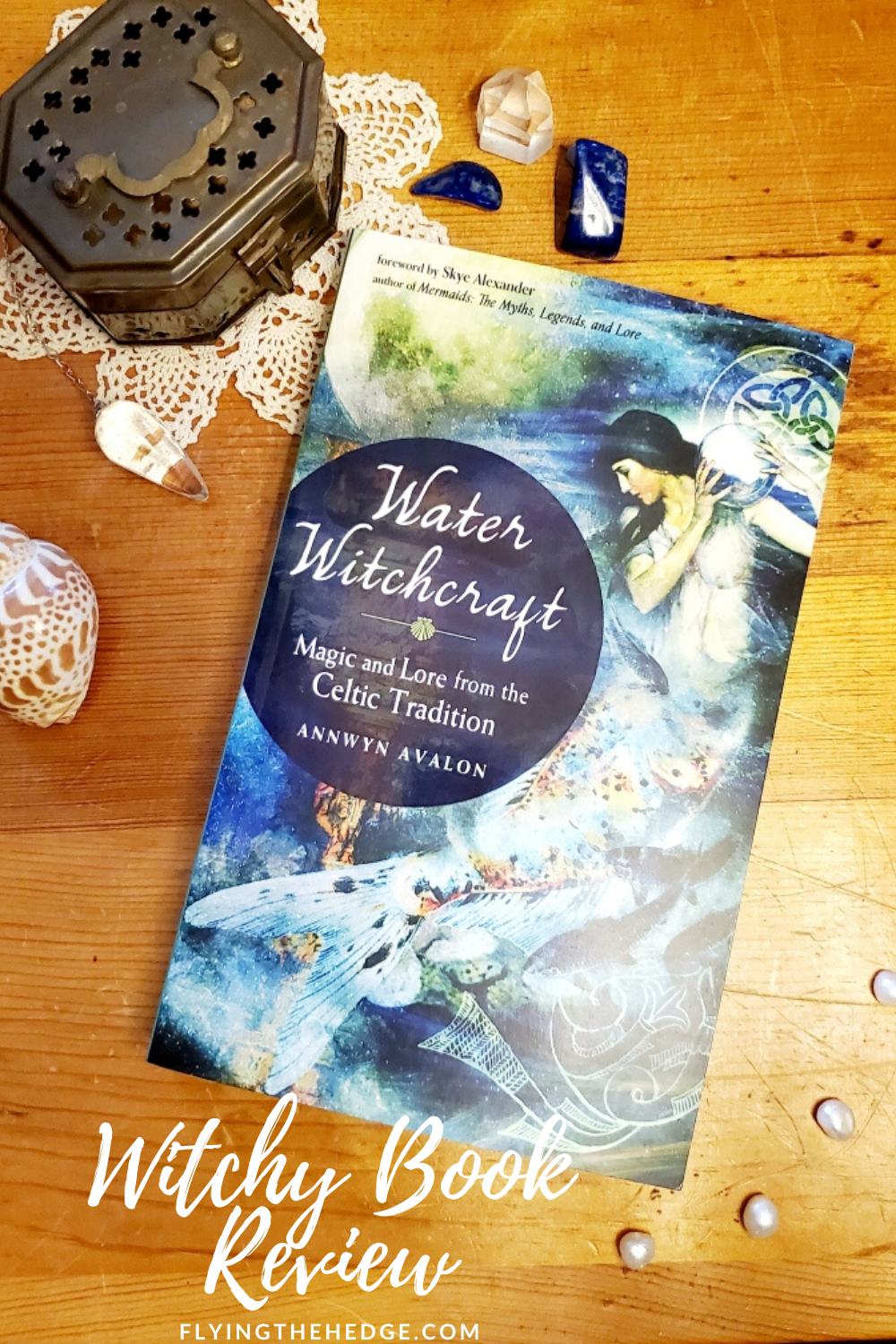
Book Review: Water Witchcraft- Magic and Lore from the Celtic Tradition by Annwyn Avalon

book review, water witchcraft, witchcraft, water magic, elemental magic, witchy, pagan, occult books

Disclosure: Some of the links below are affiliate links, meaning, at no additional cost to you, I will earn a commission if you click through and make a purchase.

Keeping with the theme of Water, I recently finished Water Witchcraft: Magic and Lore from the Celtic Tradition by Annwyn Avalon. Avalon is the author of the amazing Patheos blog, The Water Witch. I used Avalon's book to help me write some of my water folklore, specifically the part about wells in water witchcraft. While working with all the elements is beneficial, some of you may wish to focus more on the element Water than others and that's where this amazing book comes in.

Avalon digs deep into the history, folklore, and science behind Water, specifically bodies of water such as wells, rivers, lakes, marshes, and the ocean. Avalon begins by introducing the concept of water witchcraft and gives a basic overview of how water witches practice. I love that she makes notes about how, like most paths, no one water witch practices the same way. After discussing the basic similarities, Avalon begins discussing different bodies of water and how water witches have historically and modernly used them for magical purposes. The history is sound, and while there are no in-text citations, the digging I did to confirm her folklore turned up to be highly accurate. Its obvious Avalon spent extensive time researching prior to writing the book which I greatly appreciate. There is nothing I hate more than cross-checking information to find an author made some egregious errors, especially when it comes to folklore.

Scattered throughout the book are a series of exercises to help you set up a water altar, connect with local water sources, and even "hedge ride." I think Avalon's clear references to hedge riding and crossing over to the Otherworld is what ultimately won me over. There are so few books out there that cover or even mention hedge riding or hedge crossing, and it was fantastic that Avalon specifically discussed how water, especially lakes, wells, and mists, can act as portals for both spirits and humans alike to pass. For those struggling with my more Earth-centered approach to hedge riding, water may be a better option for you. Apart from the exercises, Avalon also offers extensive lists of tools, deities, nature spirits, and spells to get you started on your path. I enjoyed her spell section and it sparked a lot of great ideas for future spells and potential blog posts.

However, there were some problems I had with the book. I was most surprised by the lack of editing in some sections. Weiser Books is normally really great about catching grammatical errors and repeating phrases or sentences, but they dropped the ball in some sections. Avalon also has a habit of rambling a bit in some sections, repeating herself multiple times within the same paragraph. This may be because she took breaks in the middle of chapters from writing and forgot what she had written, or she was just so excited to be writing a book about her favorite topic that she wanted to make her point. Either case, it was at worst annoying, but usually easy to ignore. There is also a discussion of snakes and how they are poisonous and this biologist nearly threw the book across the room. Have we not figured out by now that snakes are venomous? This is honestly what angered me the most about the book, but I'm sure most people would gloss right over it without a second thought. My science heart died a little. But apart of those issues, the book is sound and well worth a read, especially by those wishing to spend more time with Water than I have time for in my Elemental Magic Series.

Water Witchcraft: Magic and Lore from the Celtic Tradition is available now. You can also find her on Patheos at The Water Witch. Whether you purchase the book or just follow her blog, I'm sure you will find her writing extremely useful and well worth the attention.

Have you read anything lately? Is there a book you are thinking of purchasing but are unsure of that you'd like me to read first? Please leave suggestions in the comments below!


If you liked this post and would like to support future content, please consider leaving a small tip in the jar.